Pixel Tiger
Back in 2018
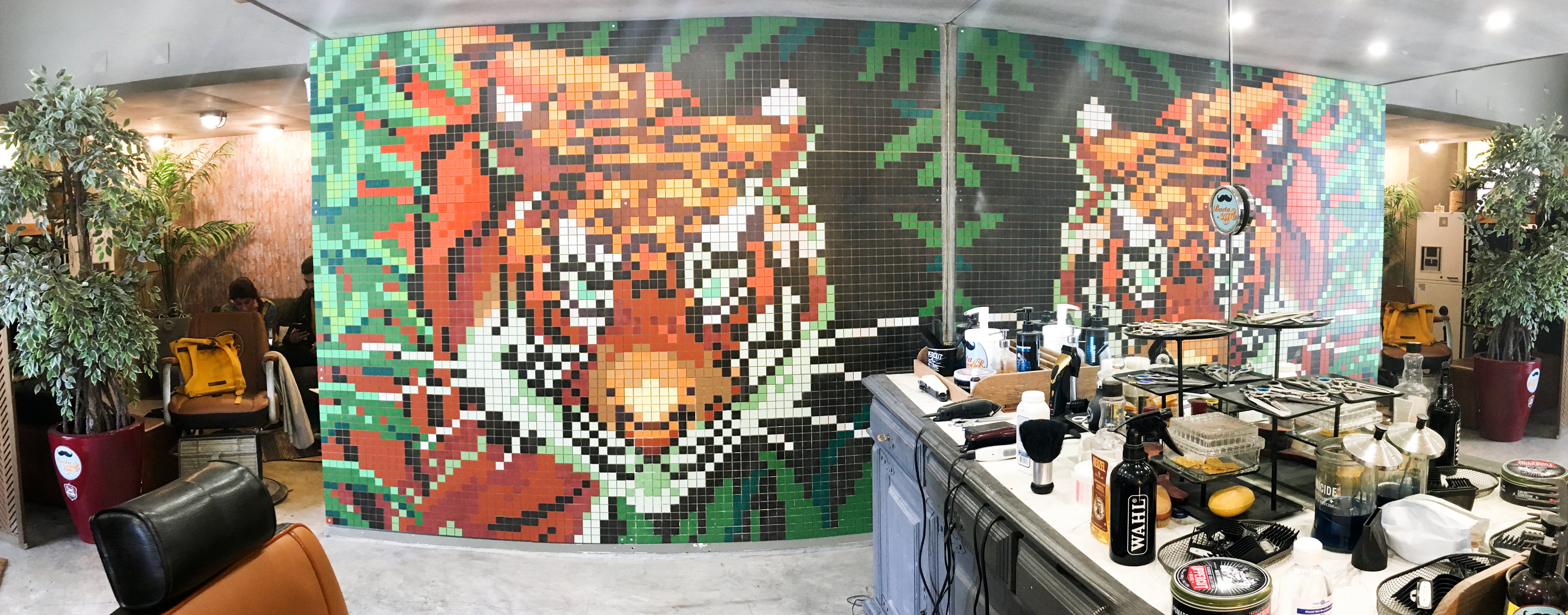
Filipa, the barber, was about to open a new shop and asked me for decorating ideas. I'd been a client of her's for years, so I was comfortable asking her if she'd like me to paint one of the walls with a pixel illustration of mine, something I wanted to do for a while. I showed her my portfolio, and she loved a drawing I did of a Bengal tiger.
Adjusting to the space
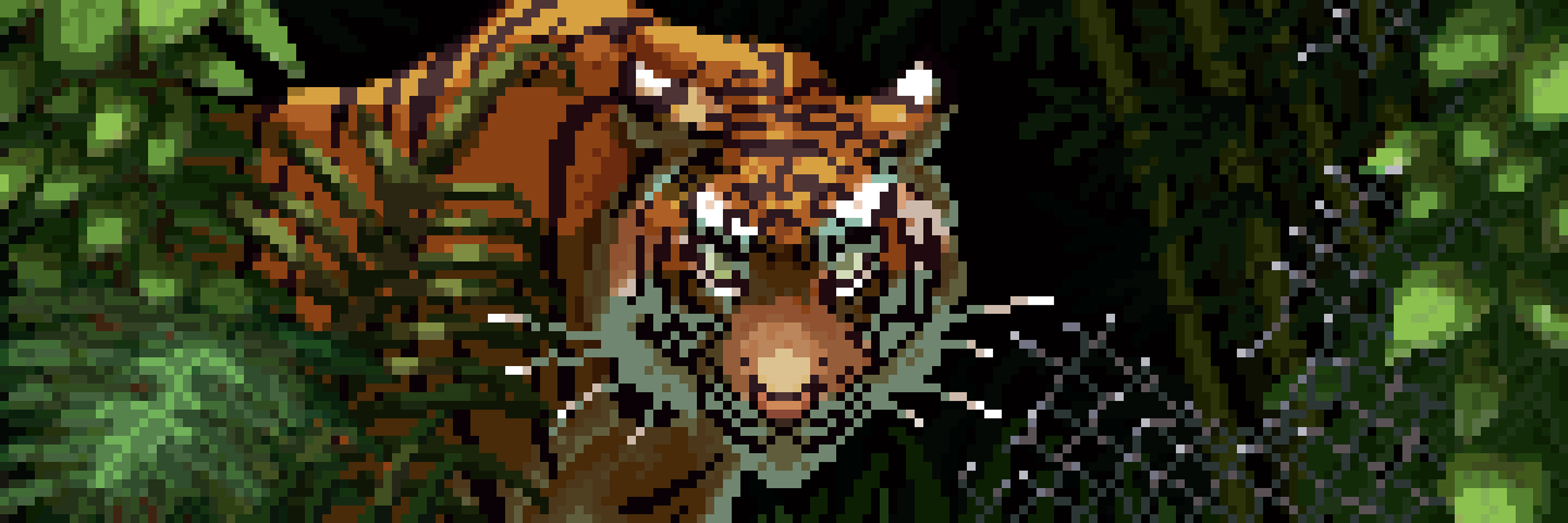
Since the chosen wall was, proportionately, 1/3 the size of the original illustration, a reasonably large crop had to be done. The colour palette was also simplified from over 100 to 22 individual colours.

This was the final colour palette. Having more than 32 colours on this painting would remove its sharpness, which I wanted to emphasise. Digitally it works, but it would be difficult to find the correct swatches of paint.
My initial intent was to paint directly on the wall, but the place wasn't her's yet so I changed that plan and decided on painting on a canvas that, when finished, would be fixed to the wall.
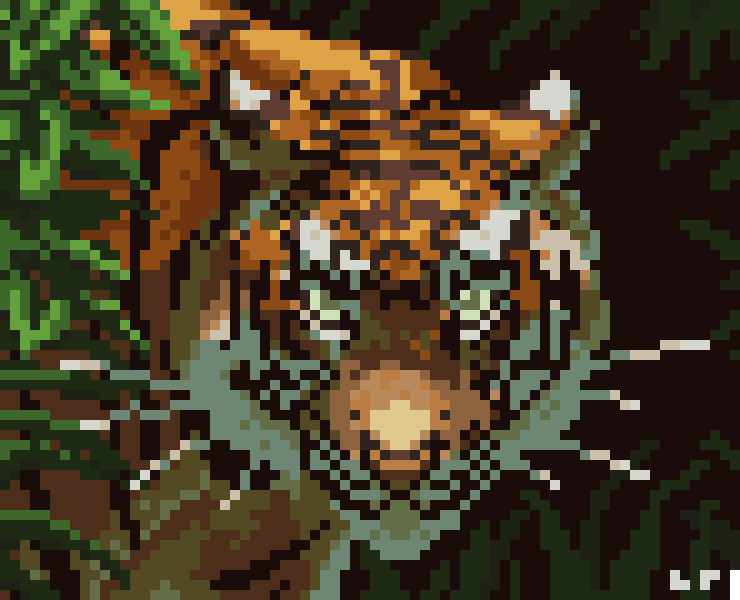
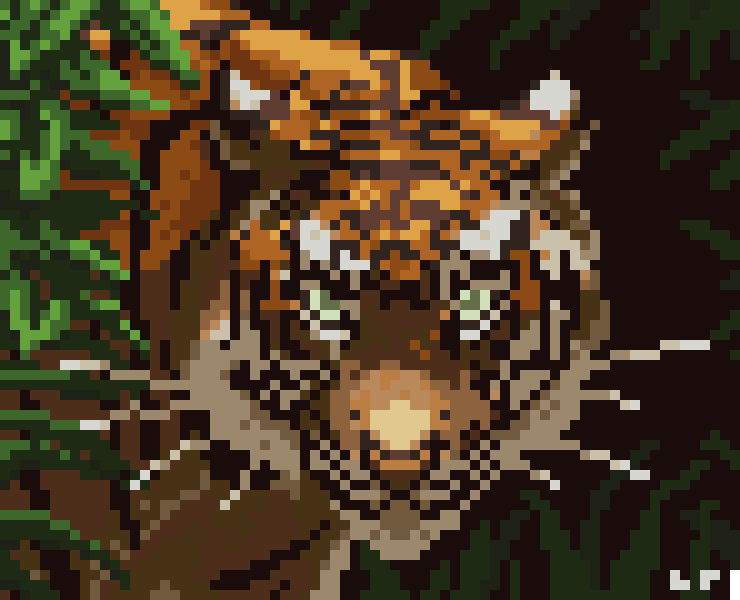
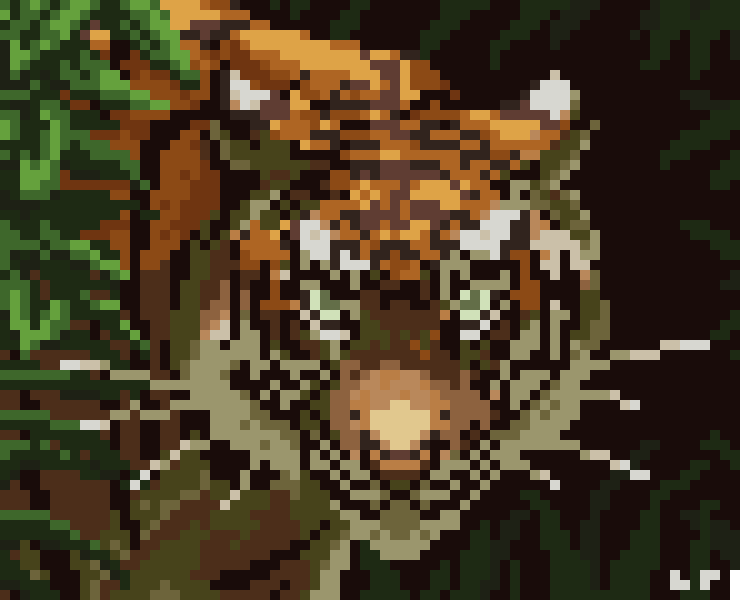
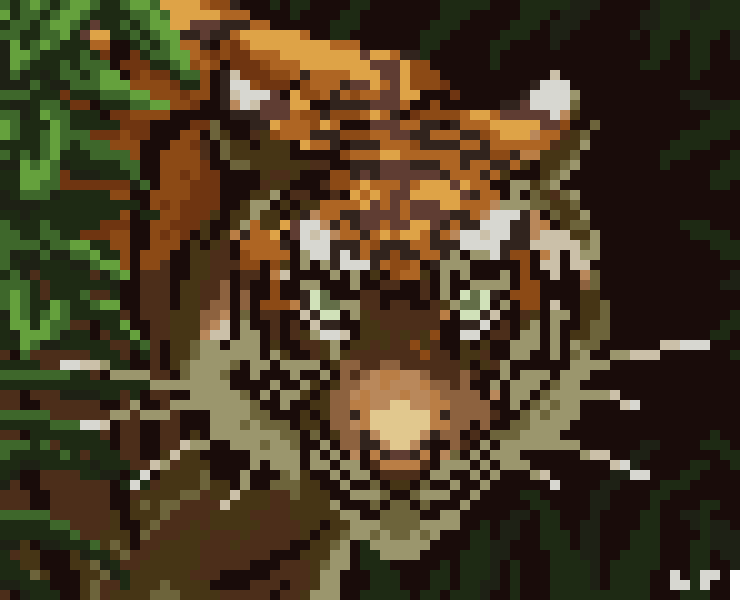
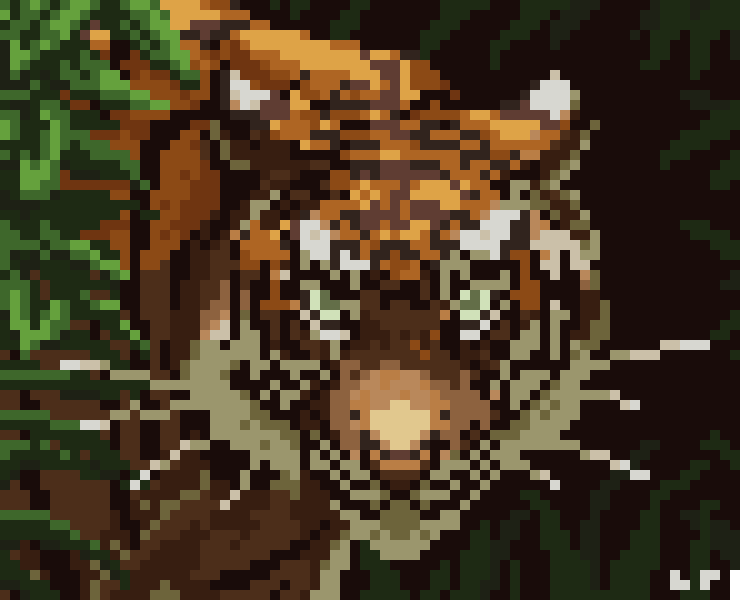
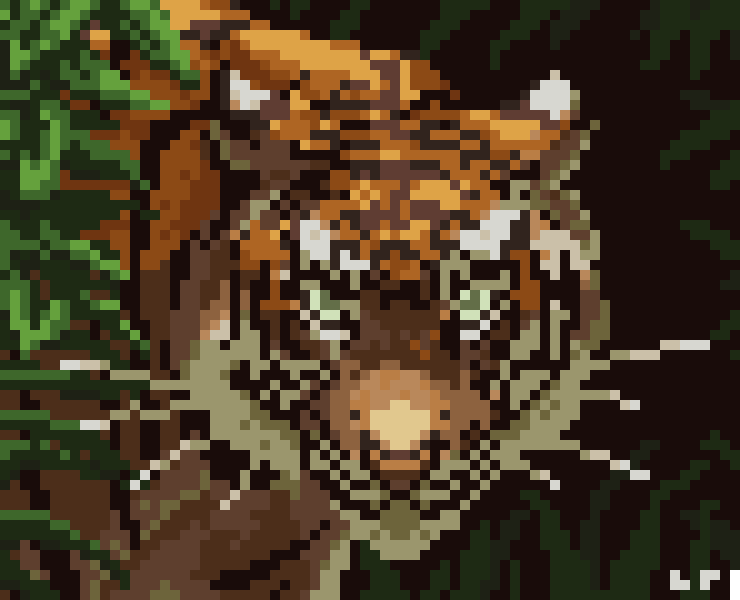
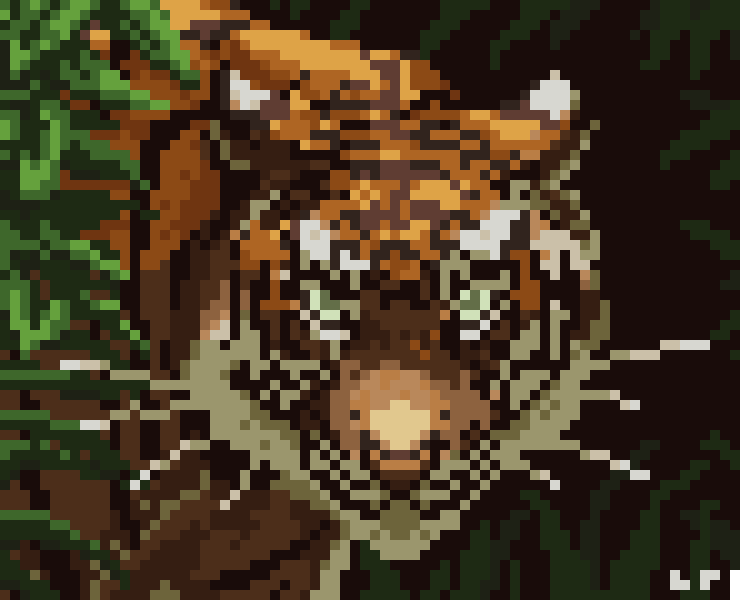
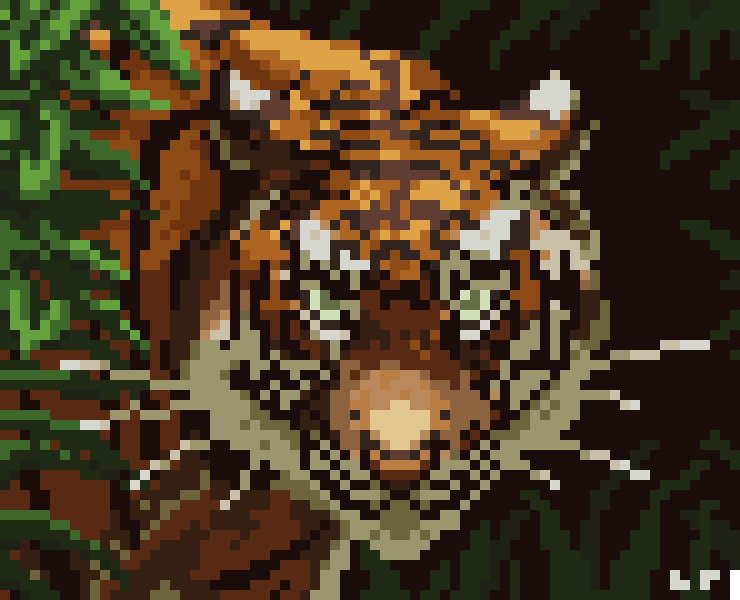
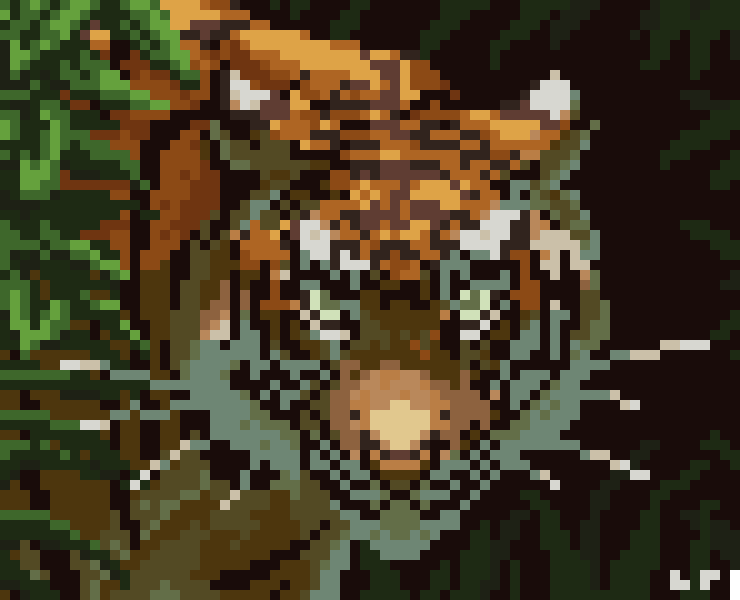
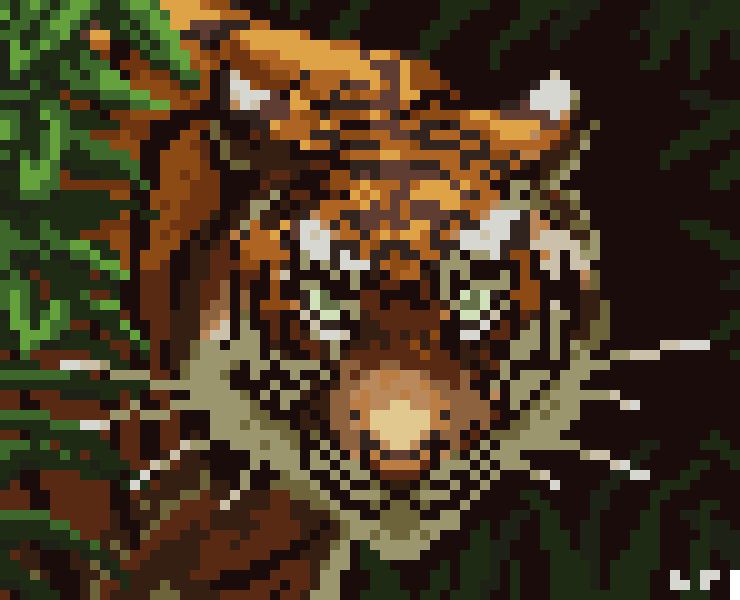
These are some of the colour studies done before painting. The crop required changes to the composition — the tiger remained the same, but the vegetation had to be readjusted. There would also be vases with plants surrounding the wall, so blending the mural with them was the goal.
The canvas
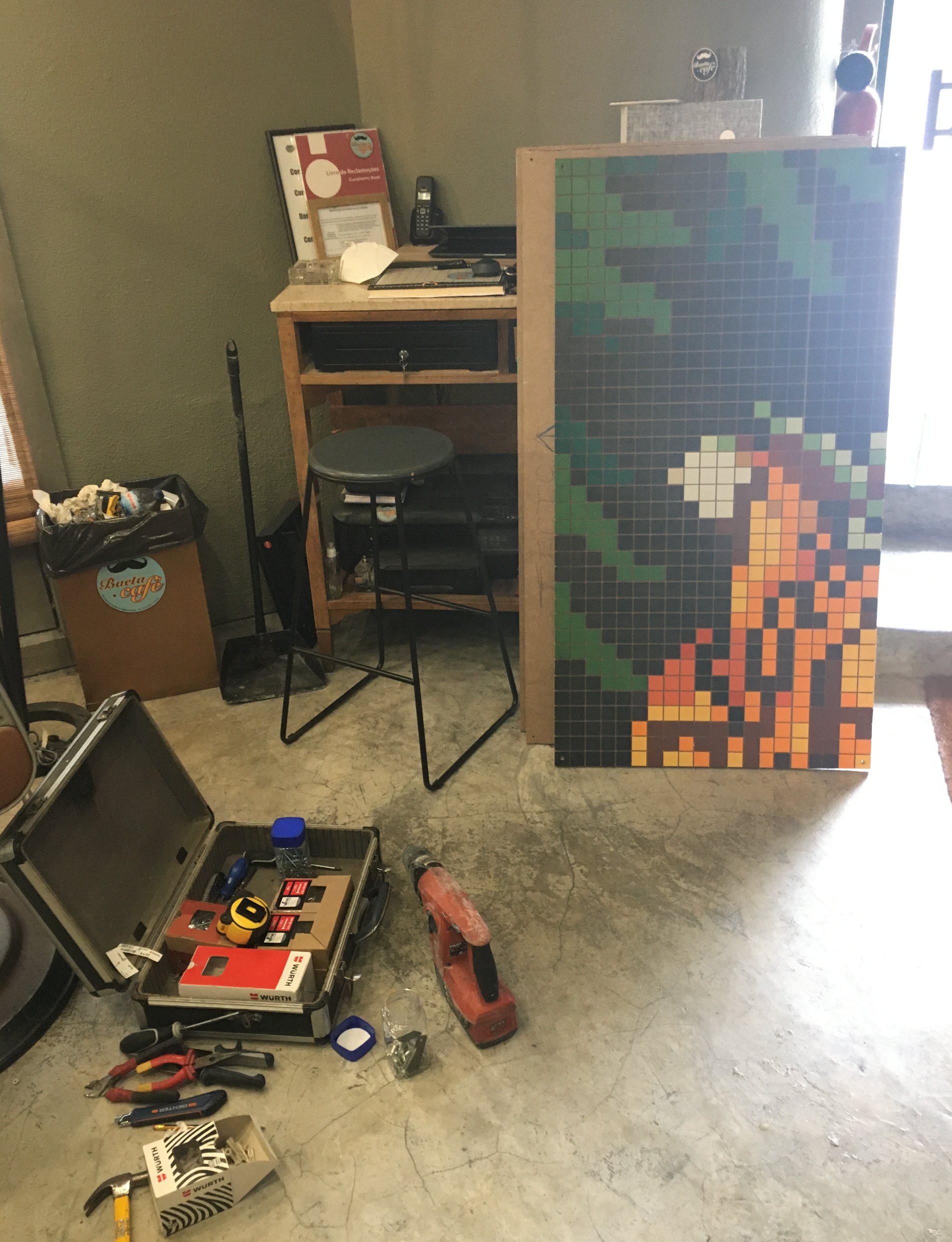
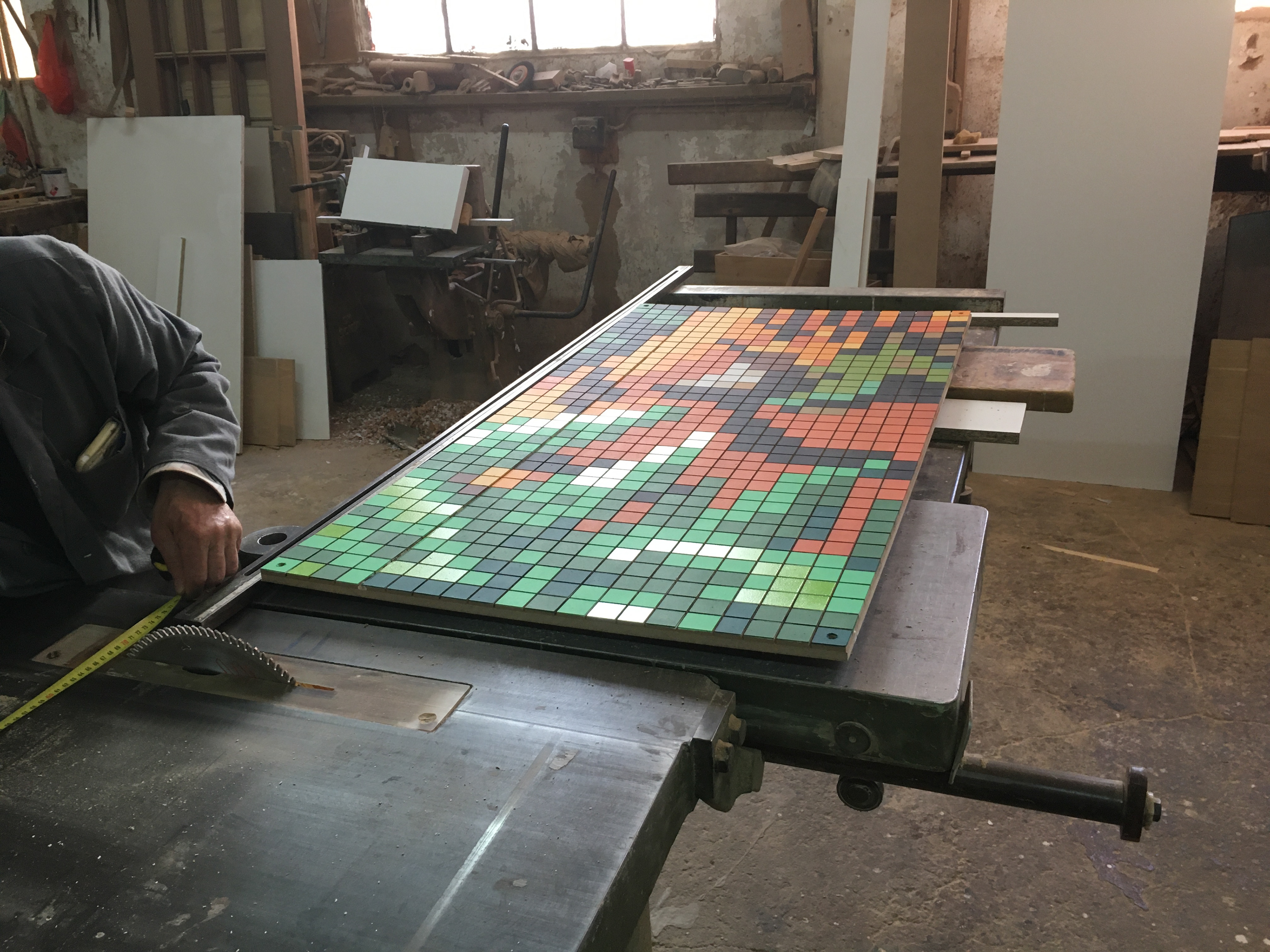
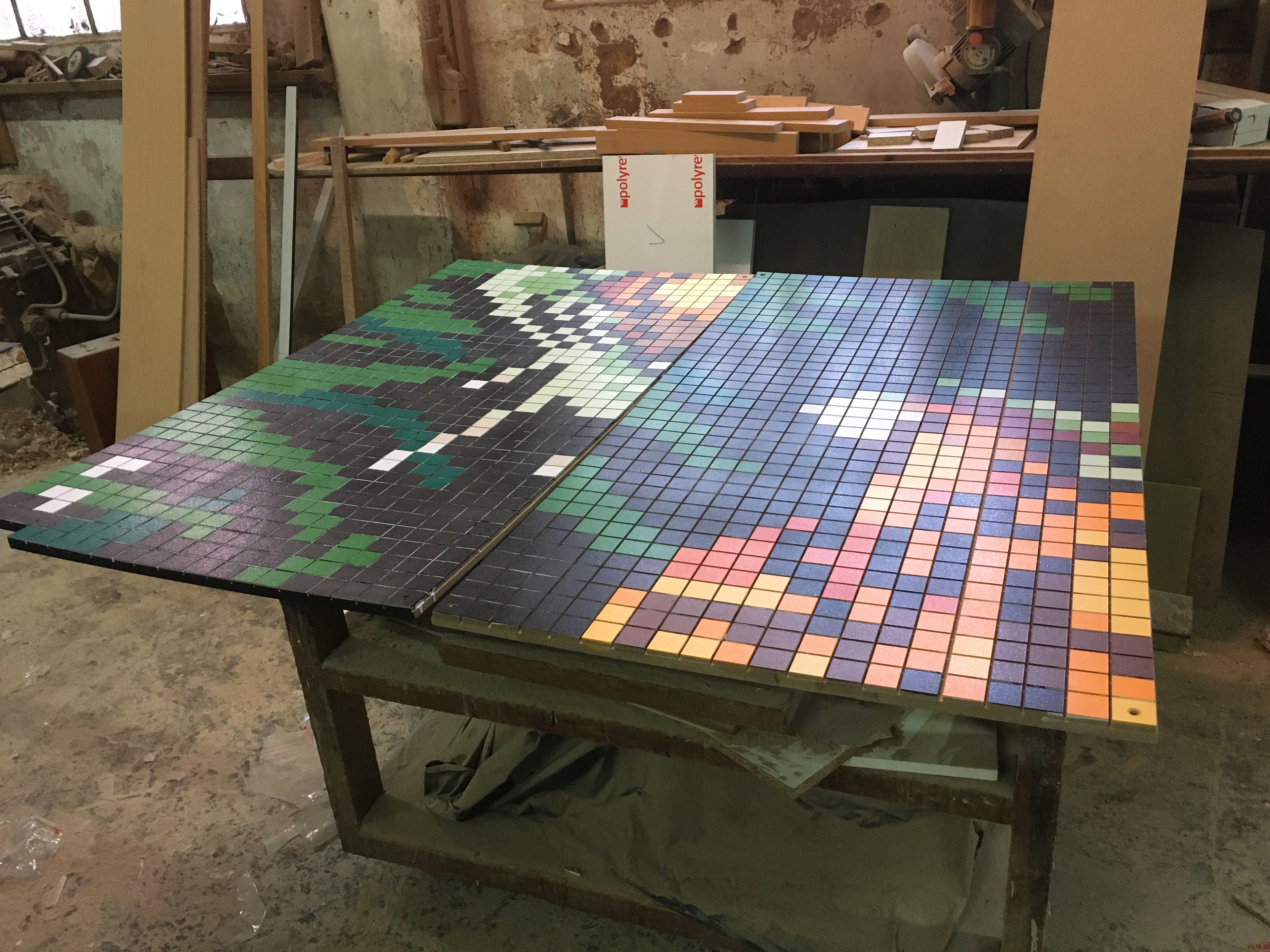
So then I had to figure out what sort of canvas to use. After brainstorming with Master Carpenter Magalhães about what course to take, I decided on painting directly on a manually gridded MDF board that would be split into 6 slabs for easier handling.
The grid was made by slicing halfway through the board. Since a CNC wasn't available at the time, a cutting mould had to be used so that the grid would be as straight and precise as possible.
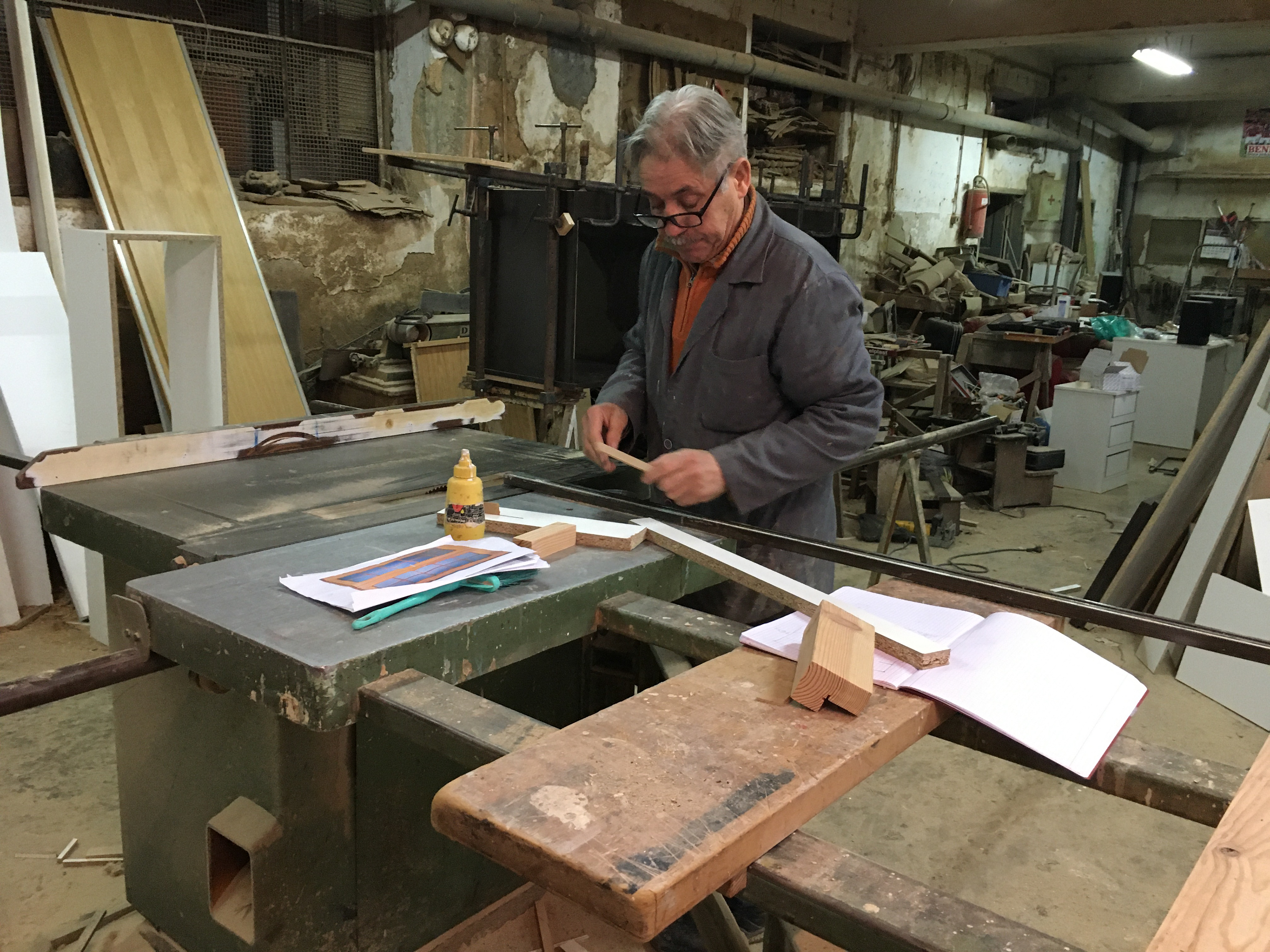
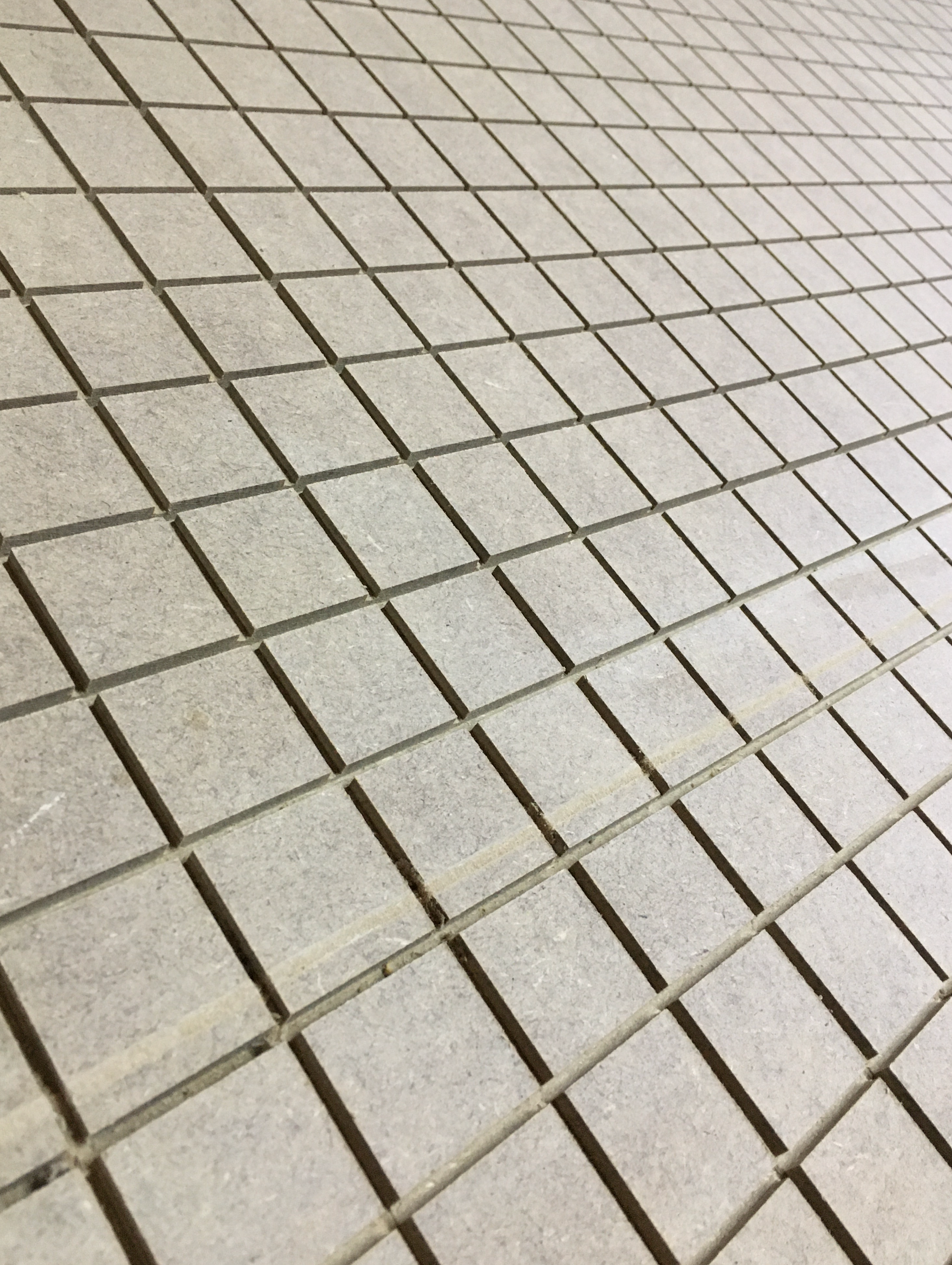
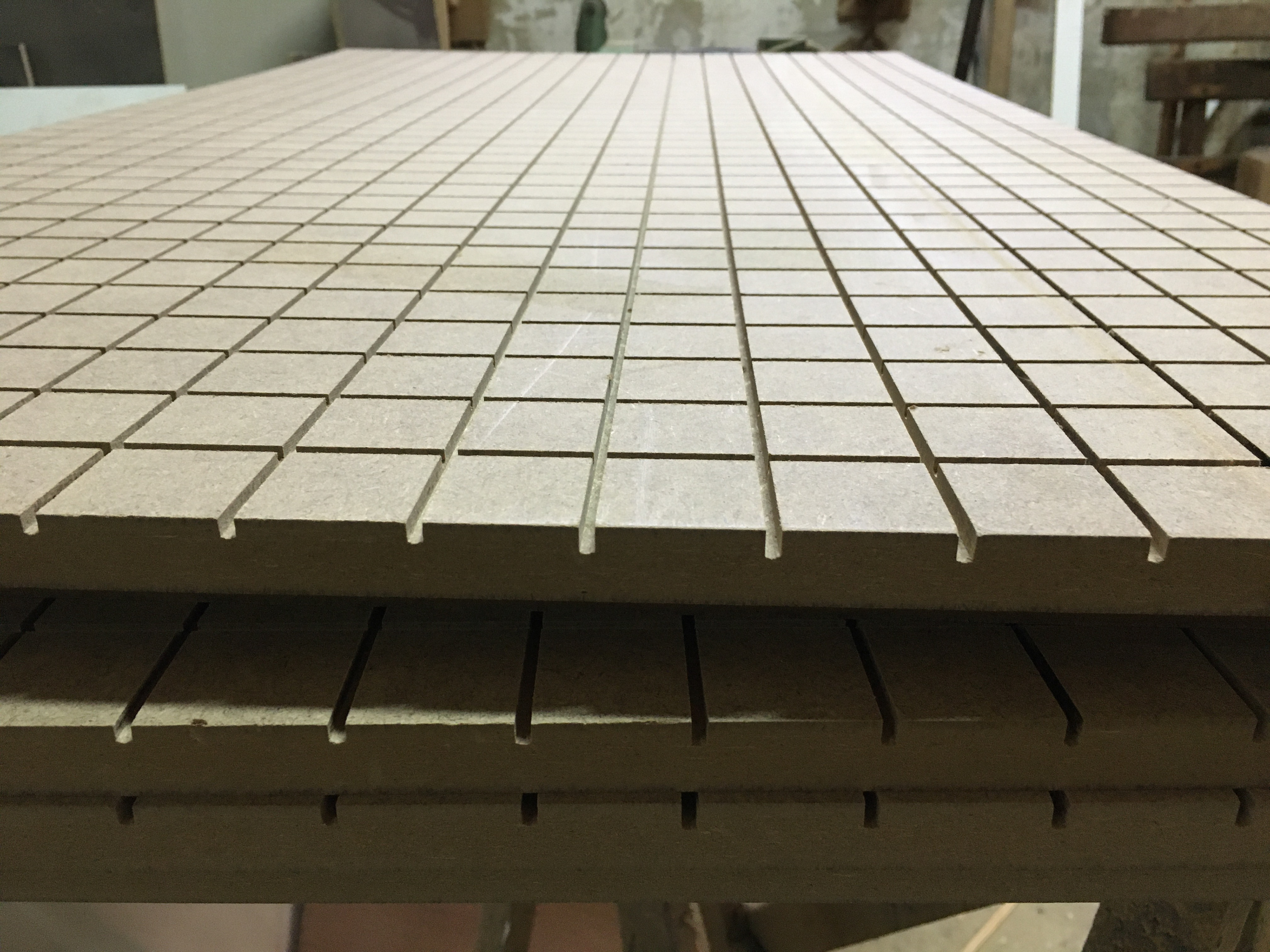
Sometimes, the slab would shift, and the cut would end up a few millimetres from where it should be. Those had to be covered and redone as those rows would be noticeably wider than the rest. This part of the process was long and tedious.
Choosing the colours and preparing the canvas
Next up, I went to a paint store to choose paint and proper colours. Finding the closest match wasn't easy. Some swatches looked correct, but the slightest shift in hue would ruin the composition, as I came to realize closer to the end of the project. But at the time I wasn't that concerned.
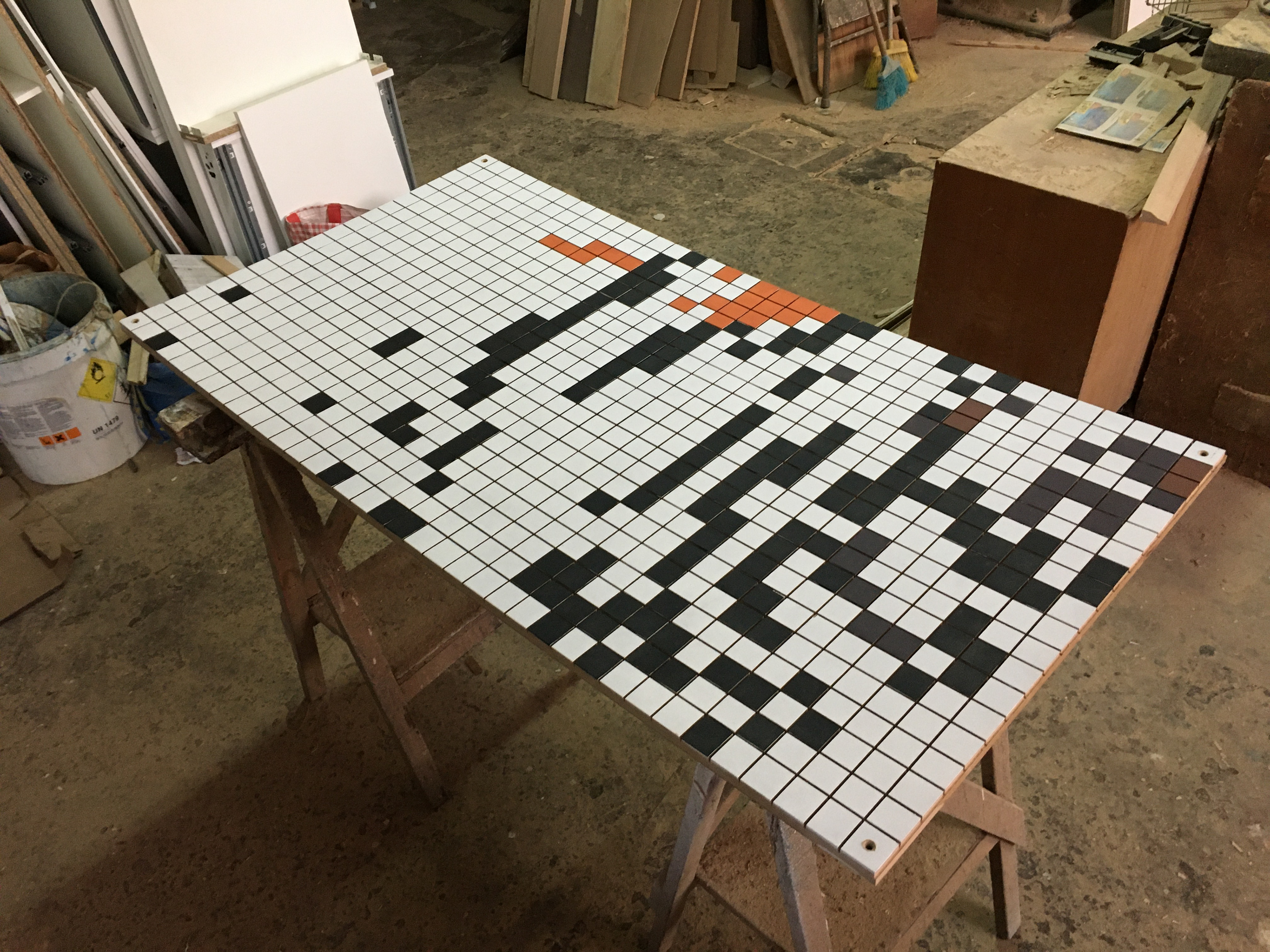
Two coats of white primary were applied to prepare the canvas. If I'd painted directly onto the MDF the paint would be sucked into the material. I started by using a brush but quickly switched to a roller as white primer started filling the gaps, which I'd want to remain unpainted.
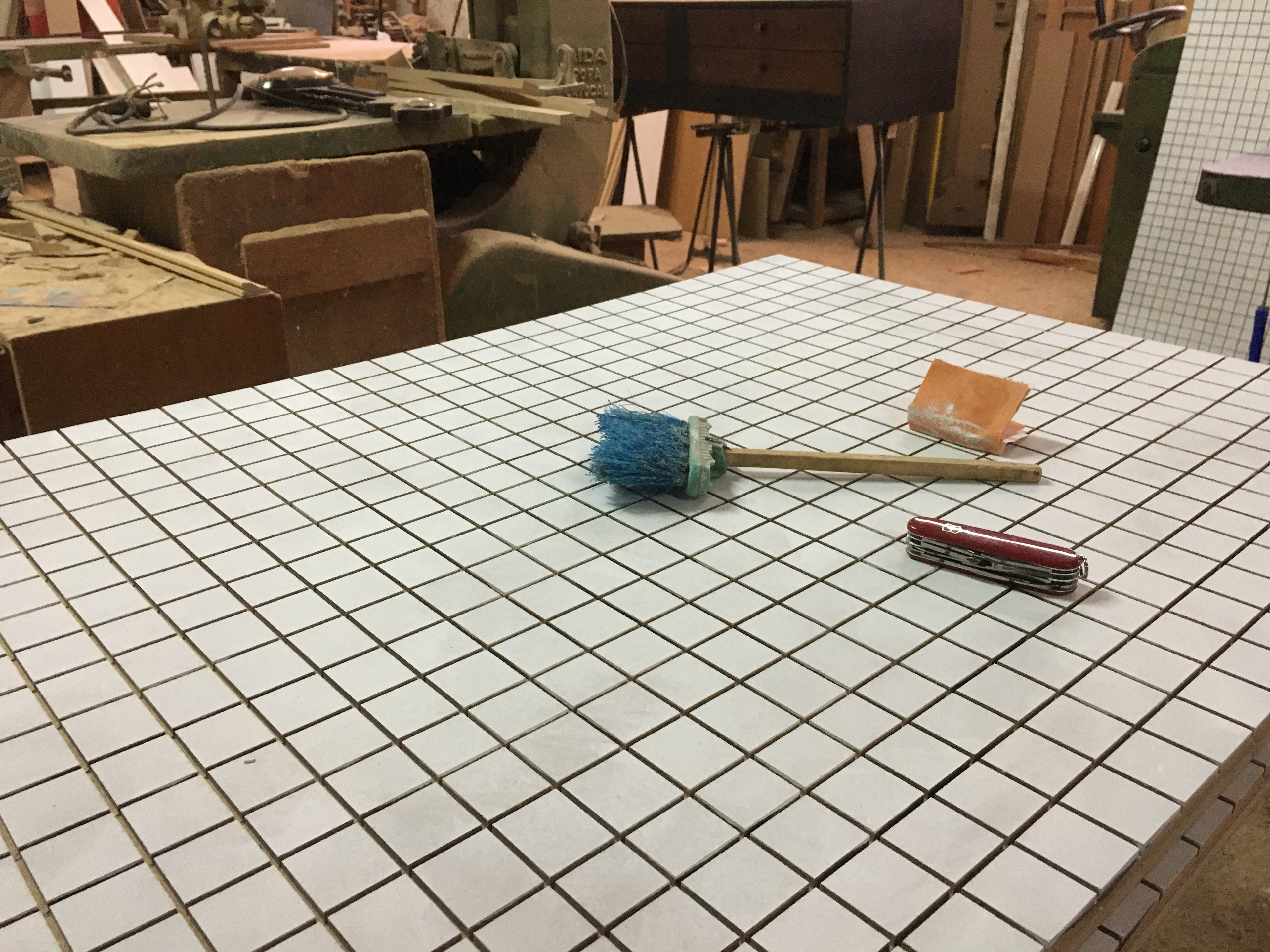
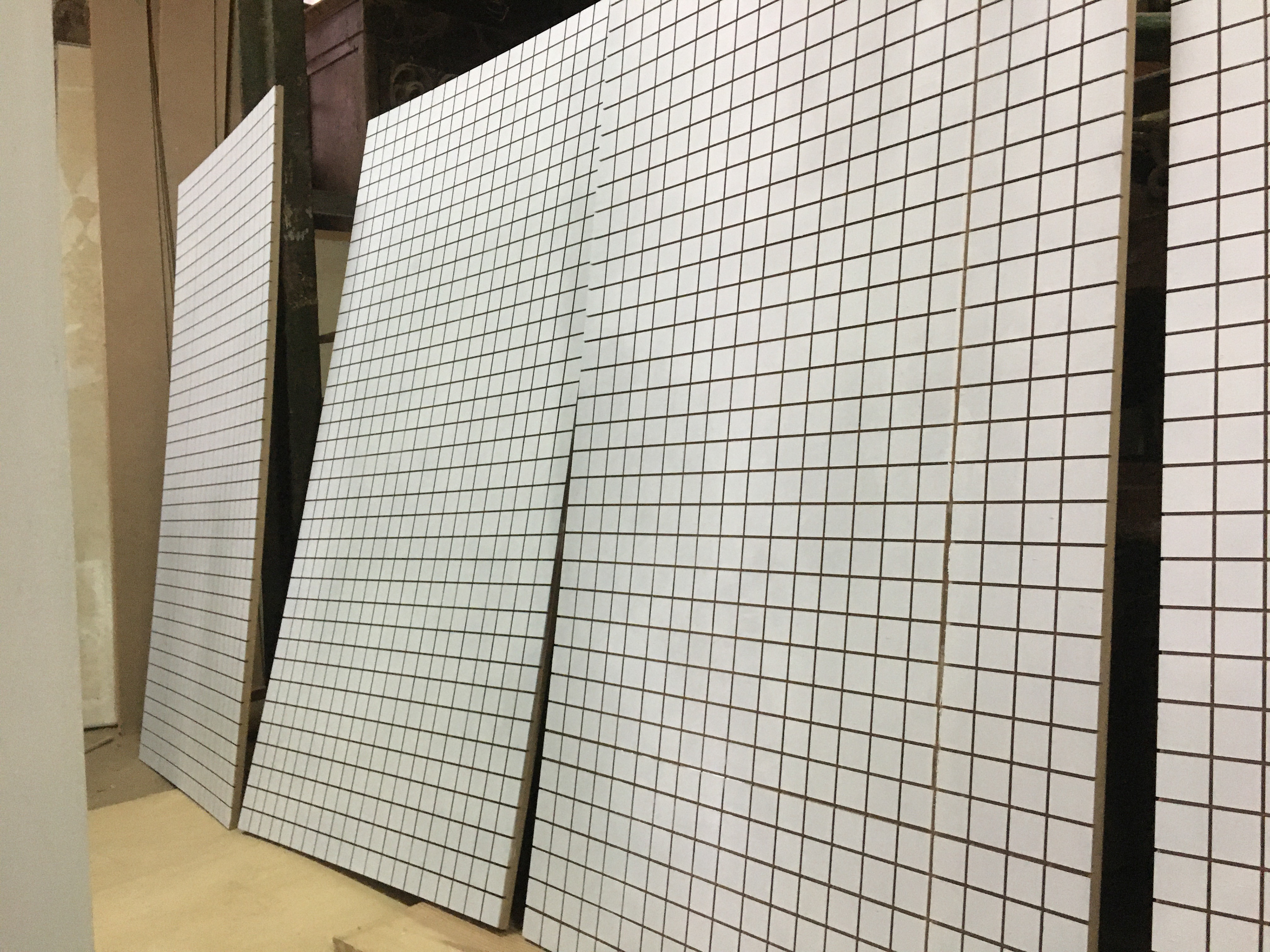
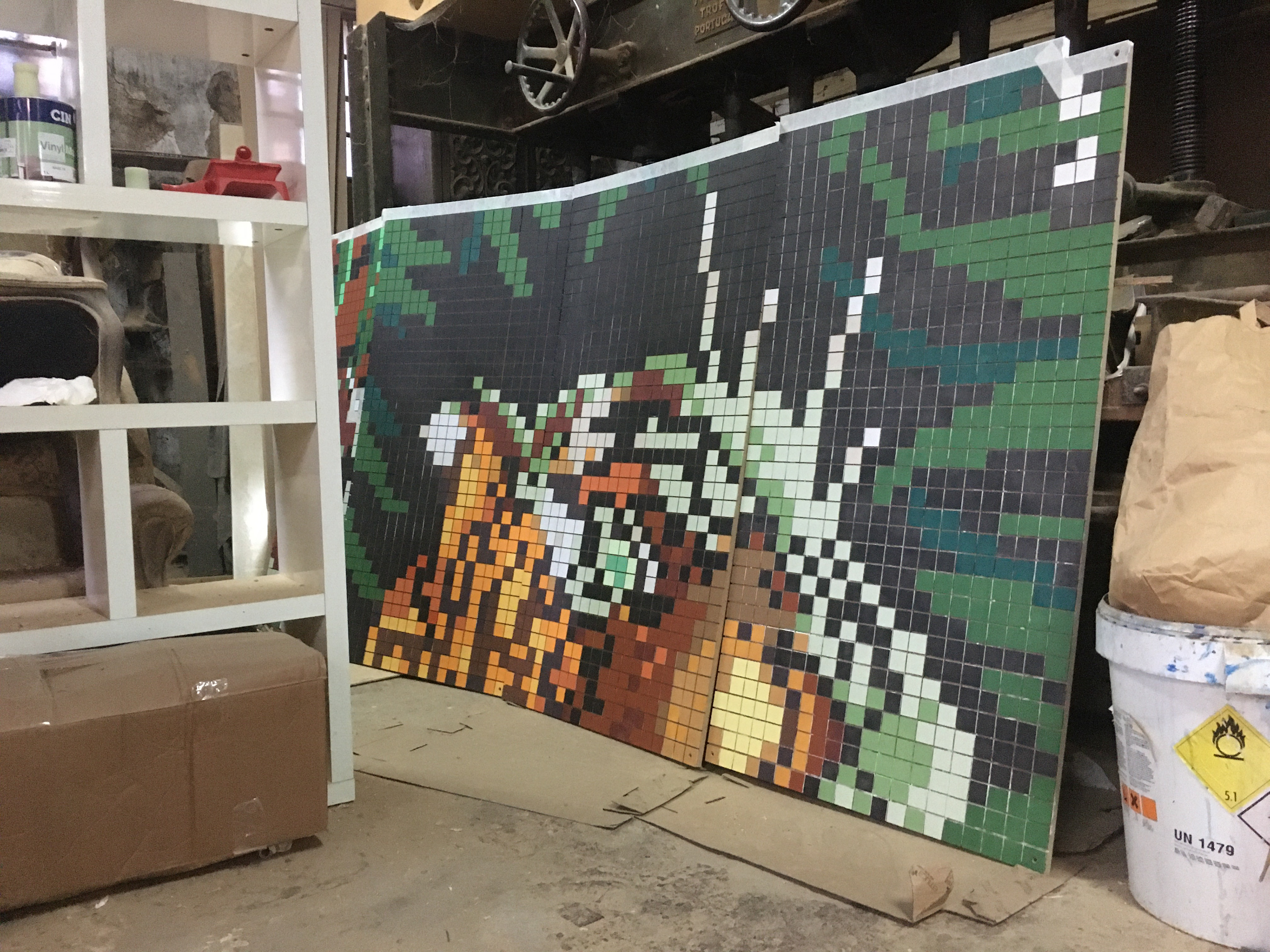
Since the slabs were like waffles due to the grid, they'd slightly curl over time, making them wobbly when on a flat surface. But that curvature would disappear when attached to the wall.
Time to paint
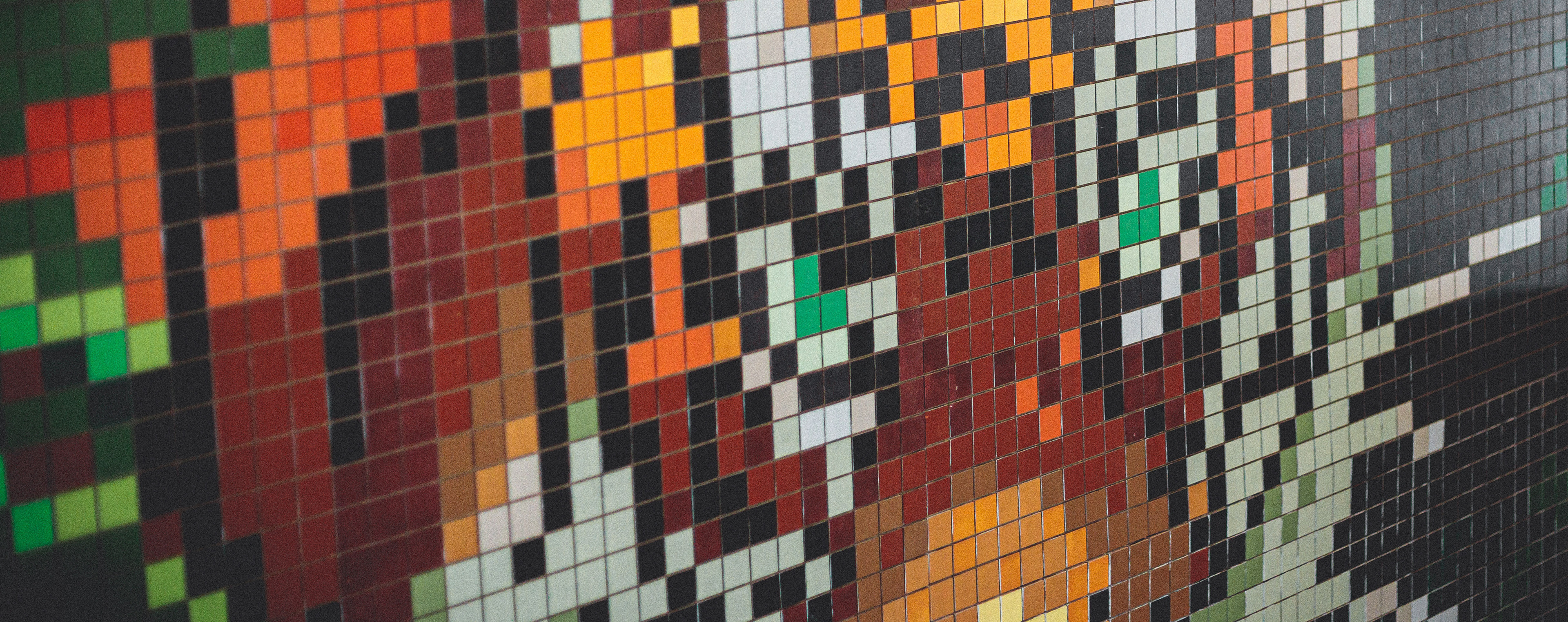
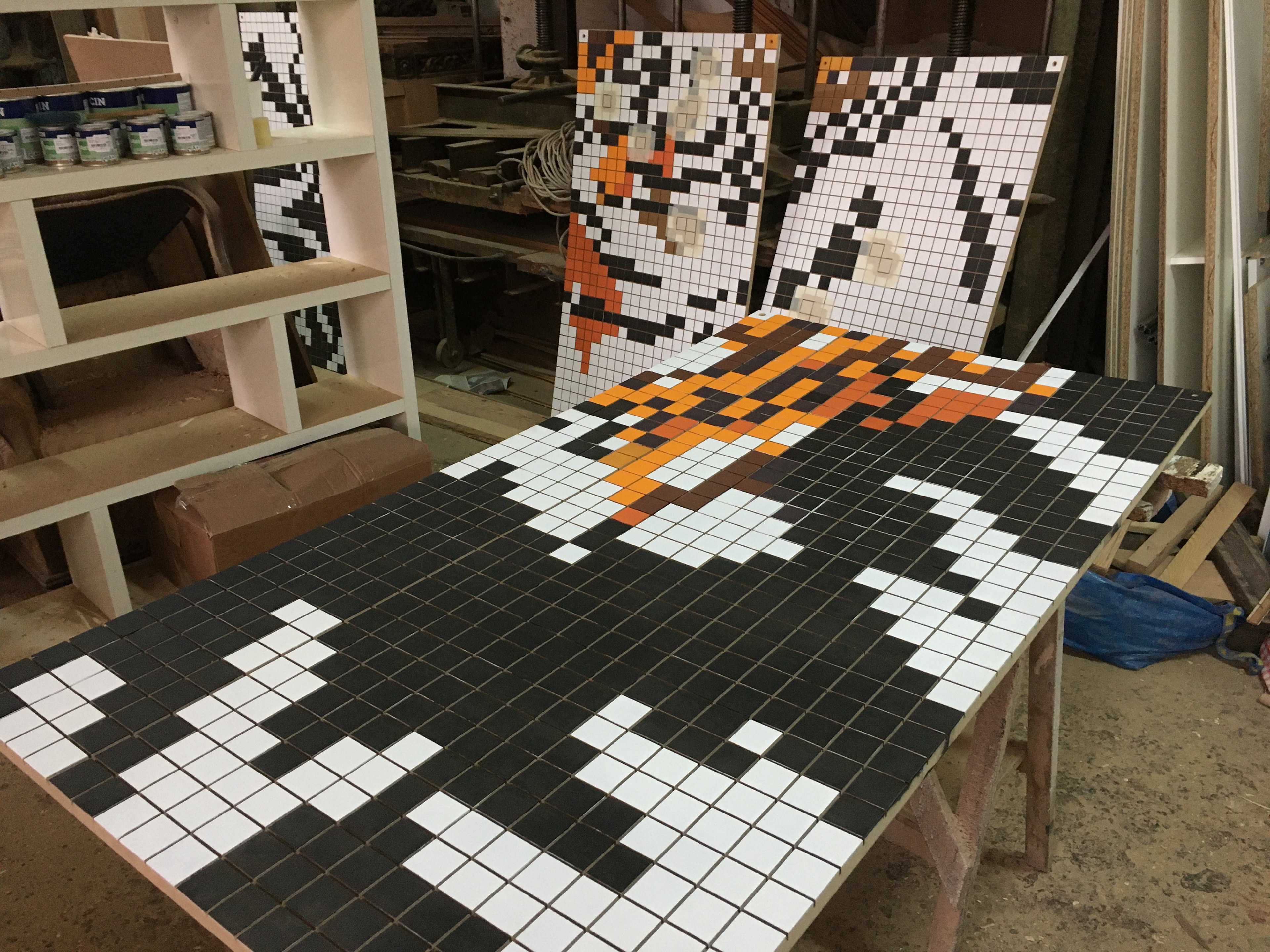
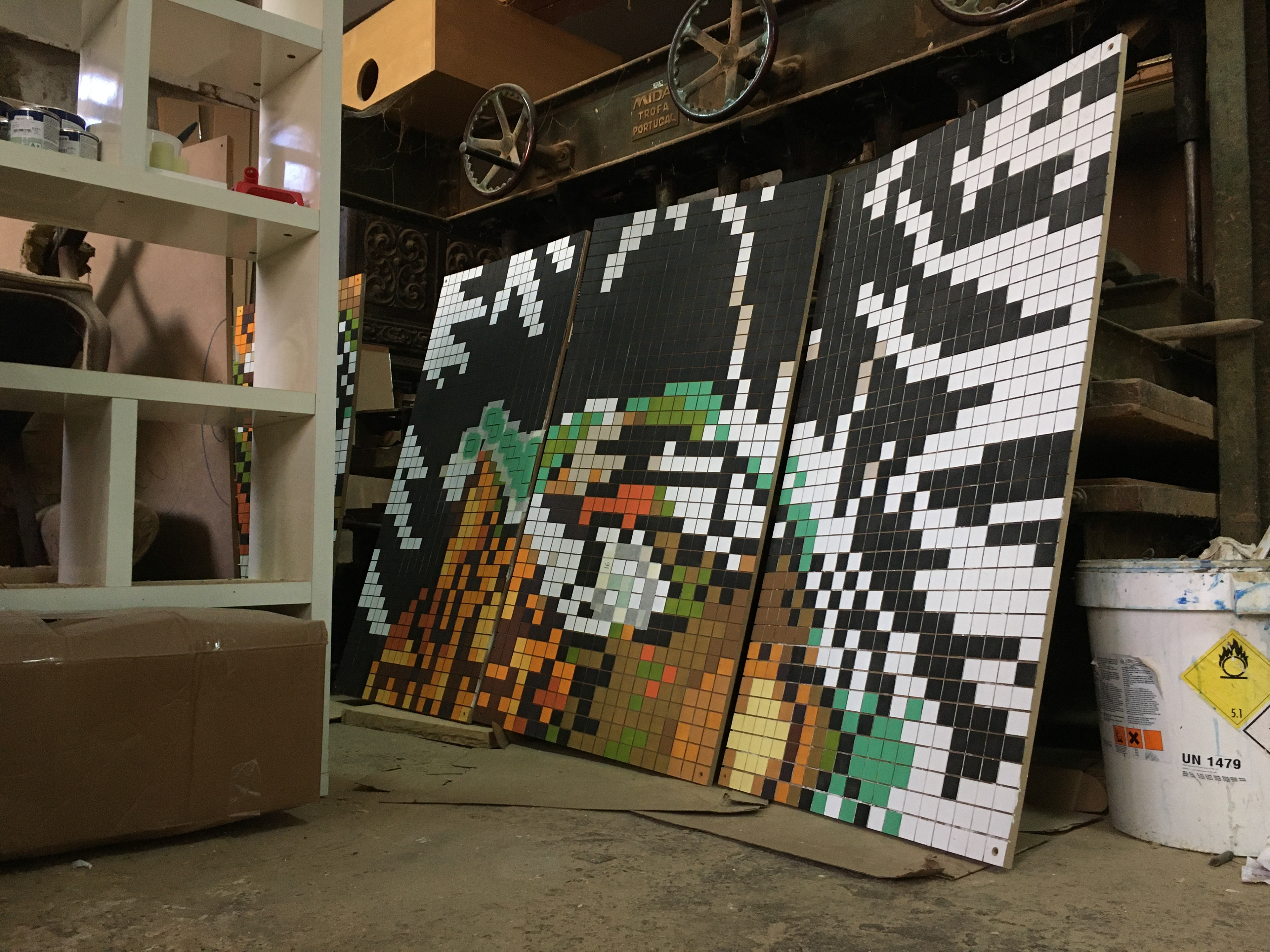
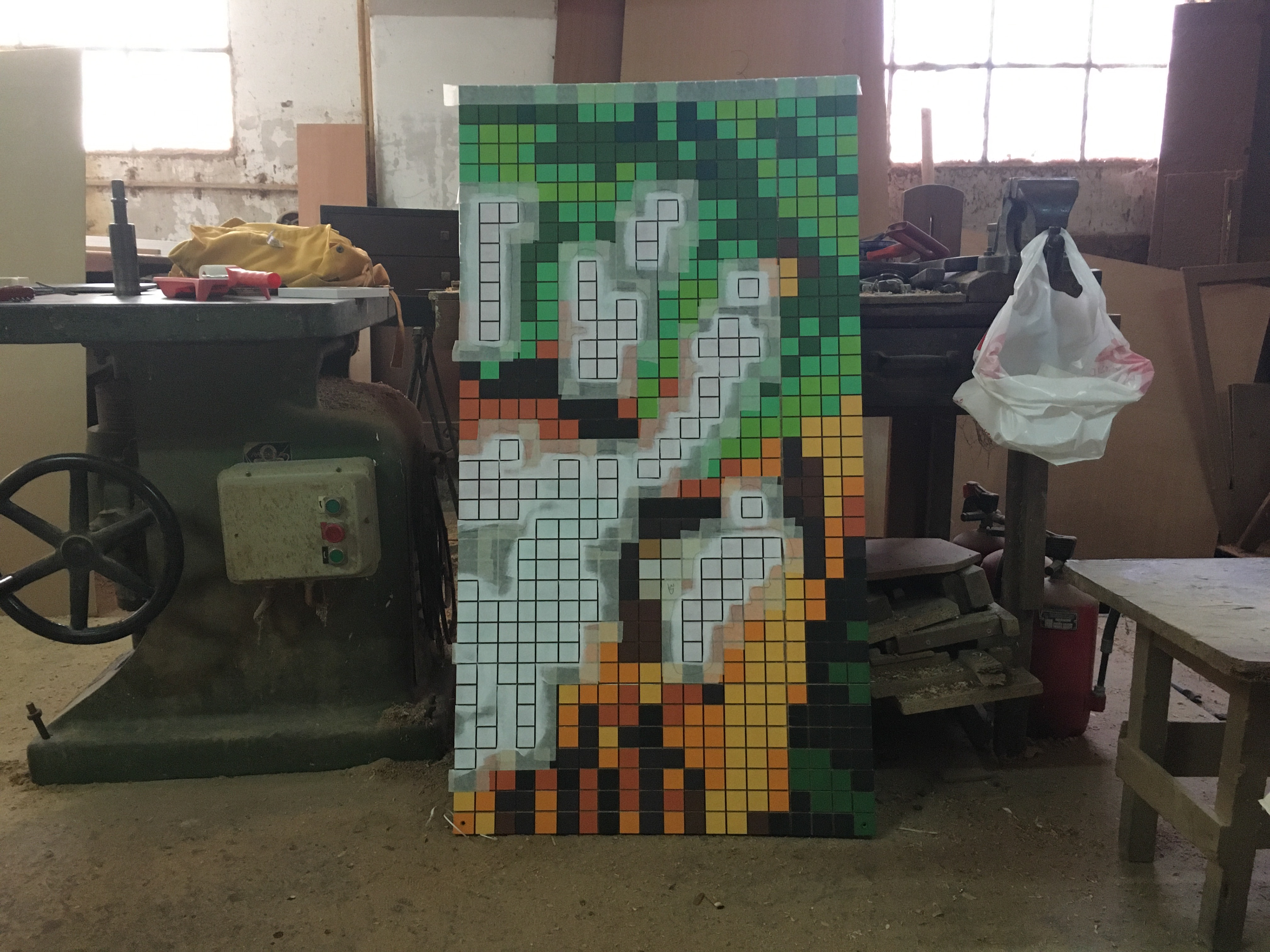
Since the illustration was vectorial, I could easily separate each colour into a separate layer and the whole drawing into 6 different artboards, one for each slab. This made it easier to know where to paint specific colours on the actual grid.
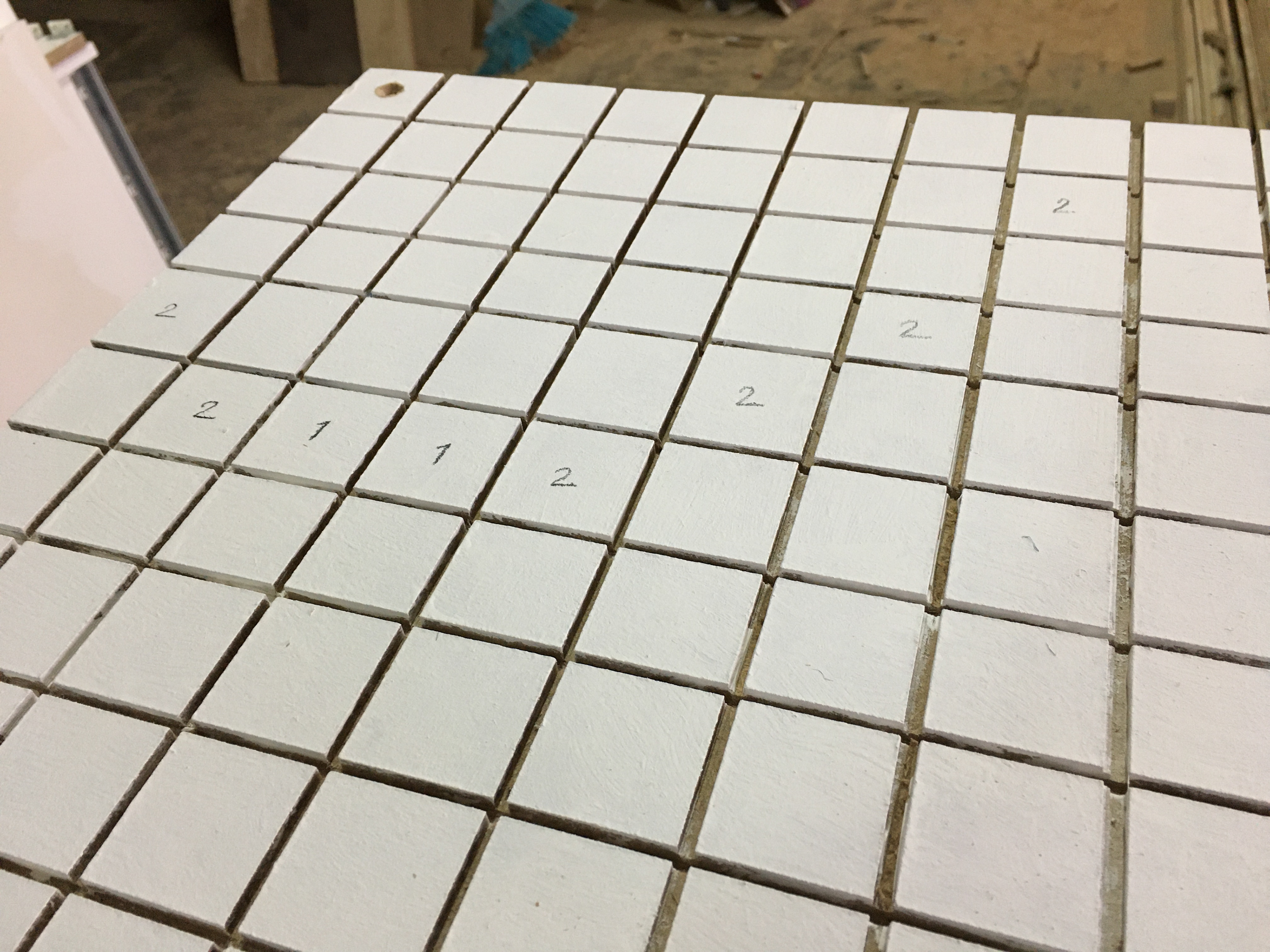
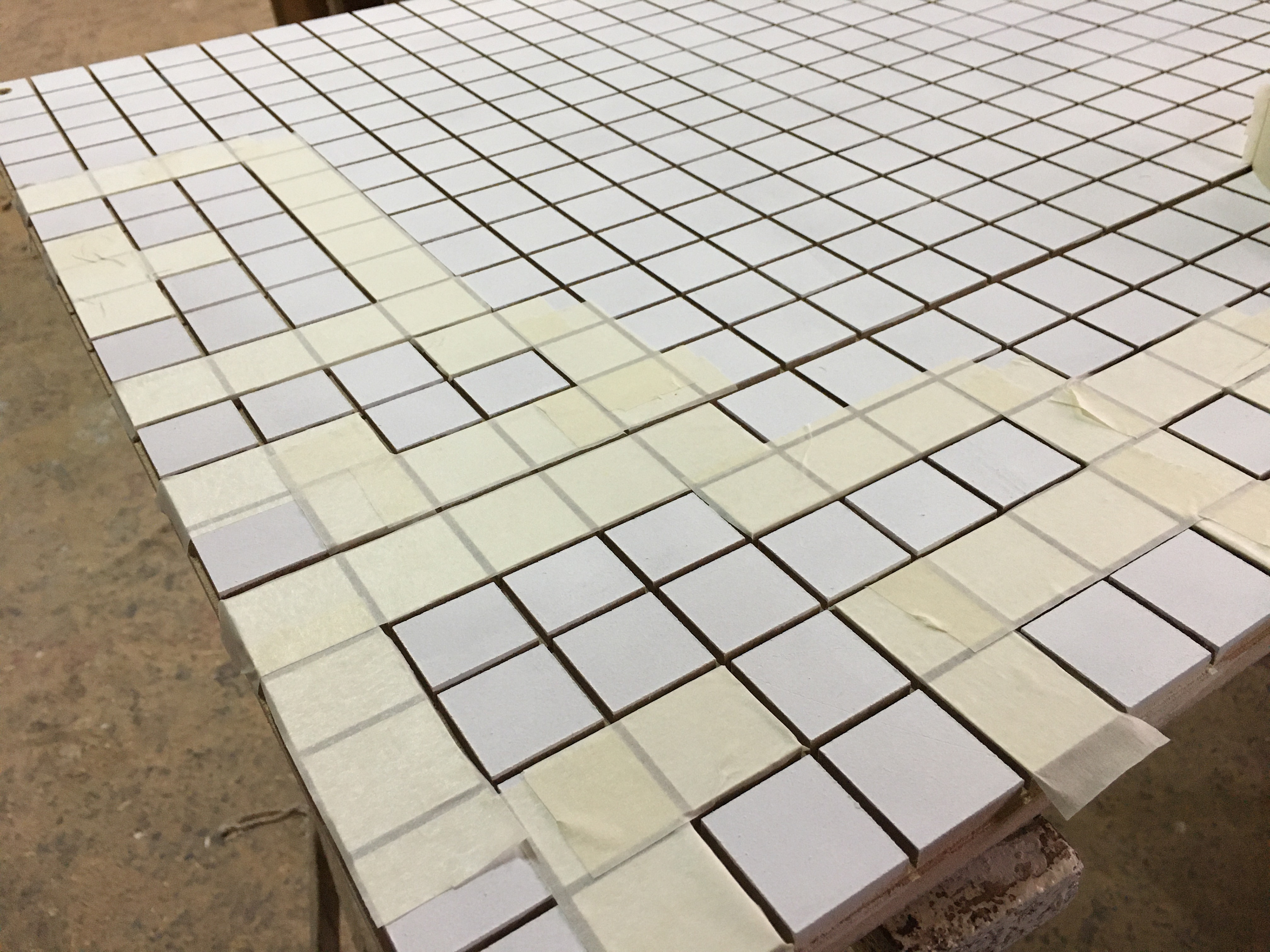
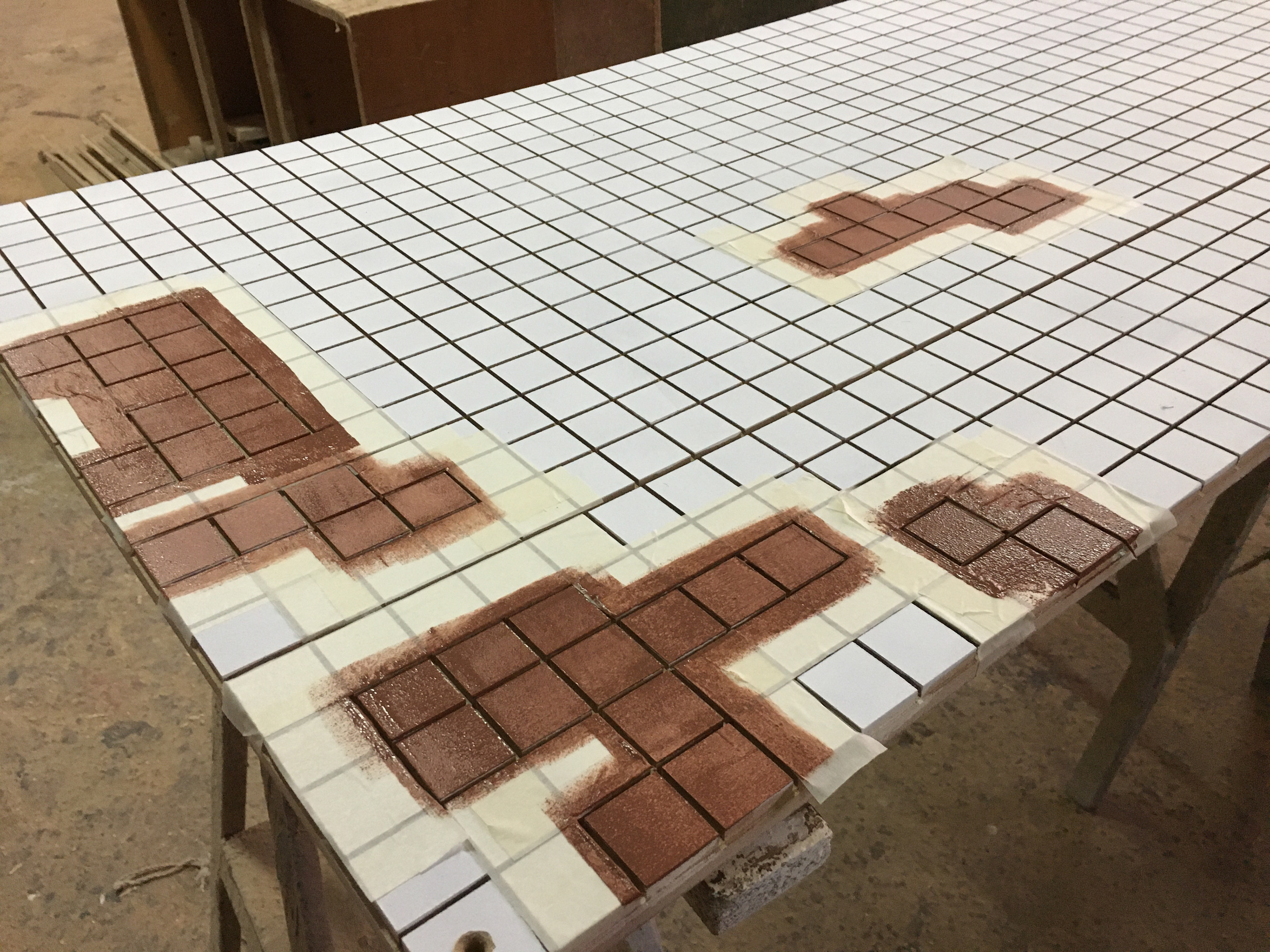
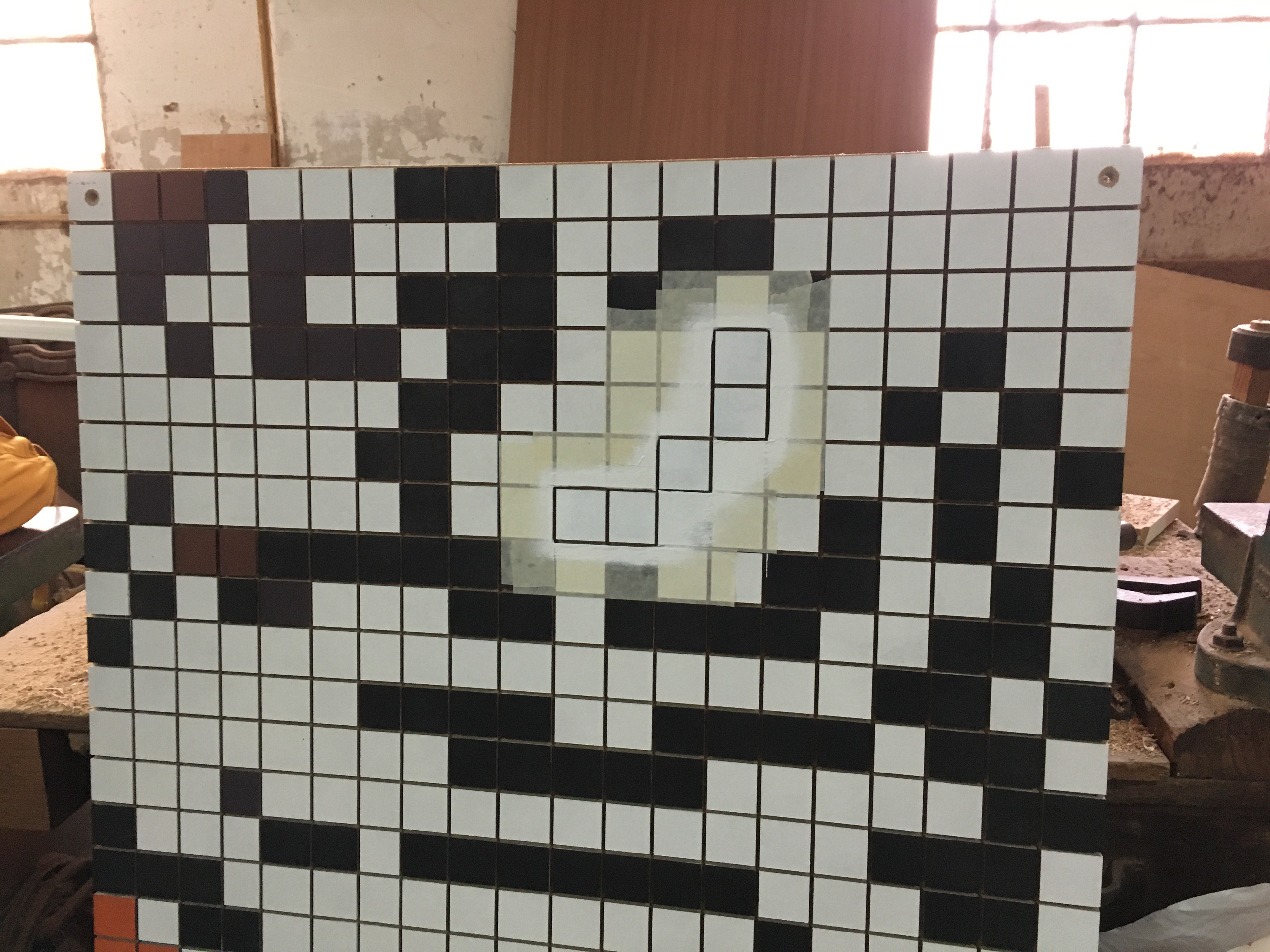
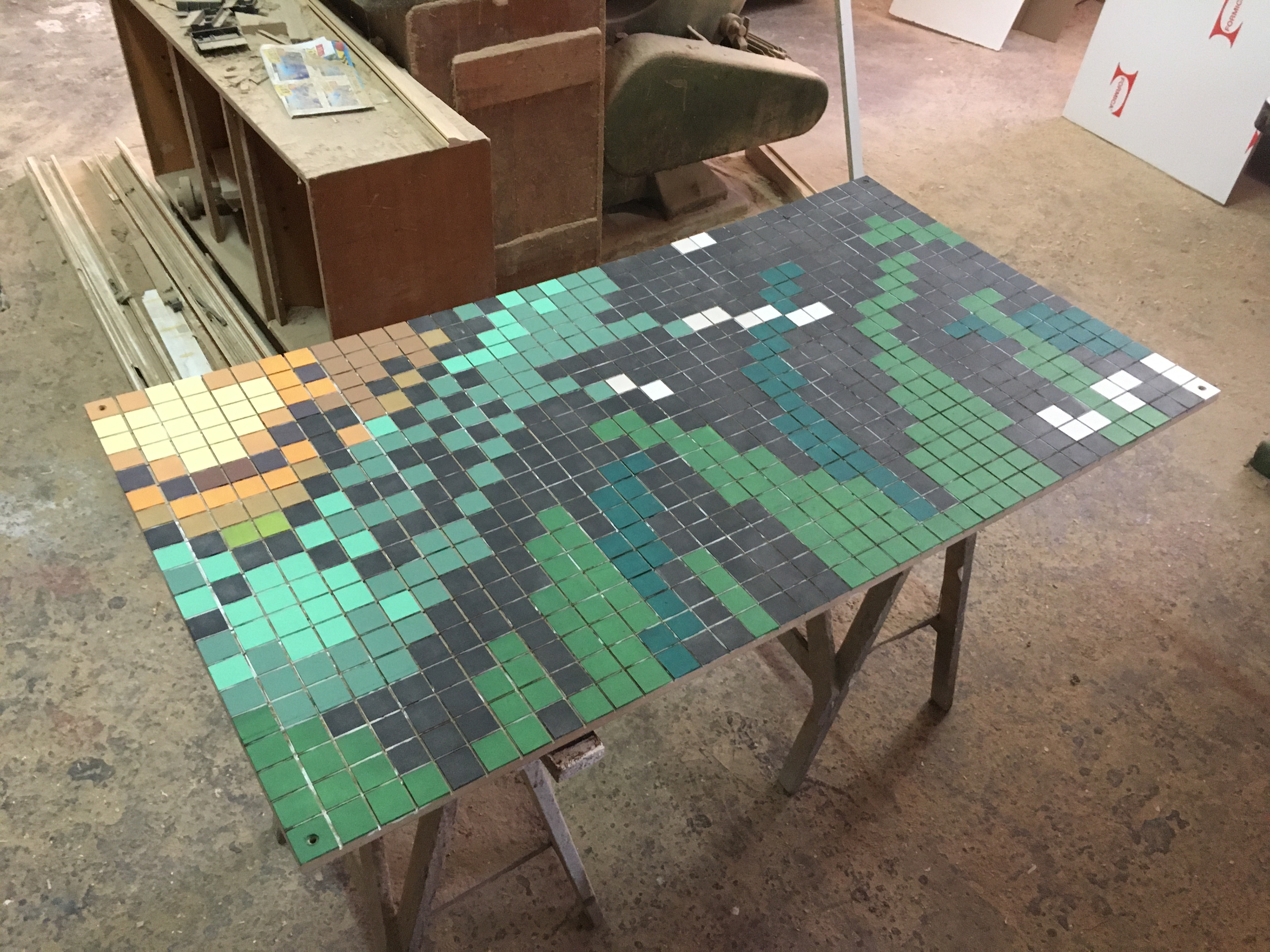
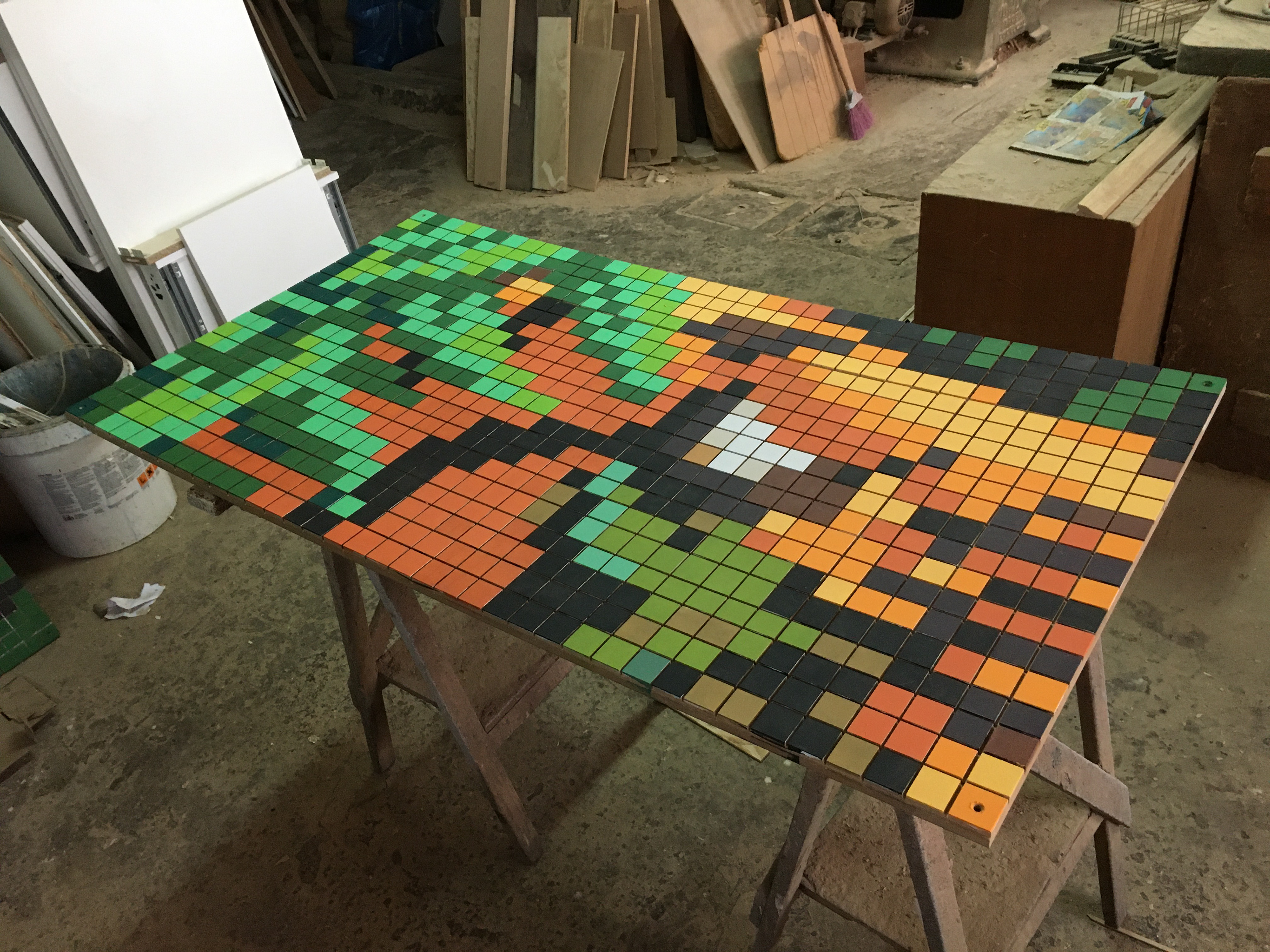
First, I approached this as a paint by numbers thing, placing numbers on each square but ended up just looking at my laptop, which I kept close by, to know where each colour went. I used lots painter's tape to outline the painted area and protect the other squares on the grid.
Each colour had to have at least two coats of paint. Some of the lighter, less opaque ones had to have up to four. The only exception was a pistachio green that only required one pass as it was in a spray can. Because of that I had to protect a larger area to avoid spraying already painted squares. An advantage of using spray cans is that the paint dries almost instantly.
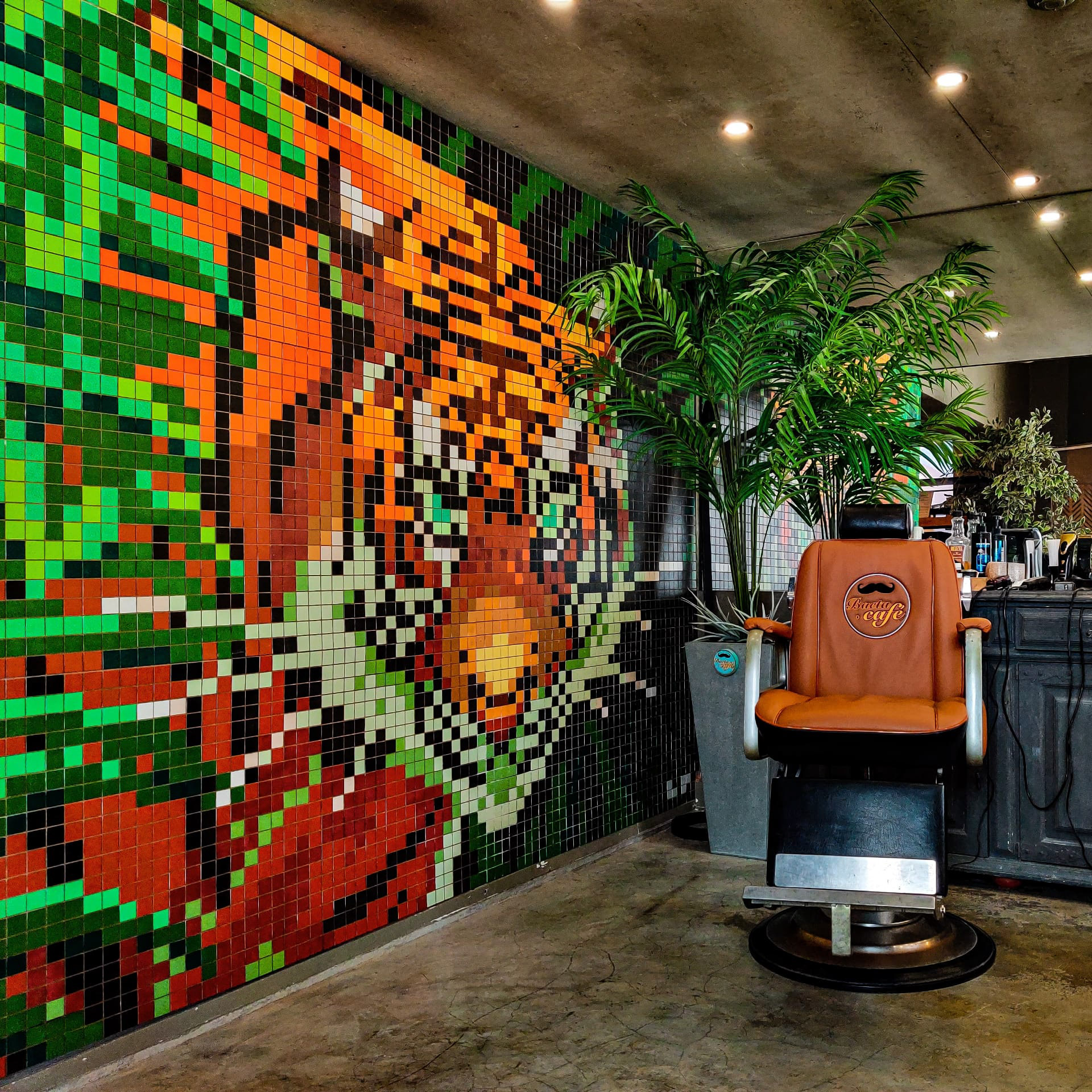
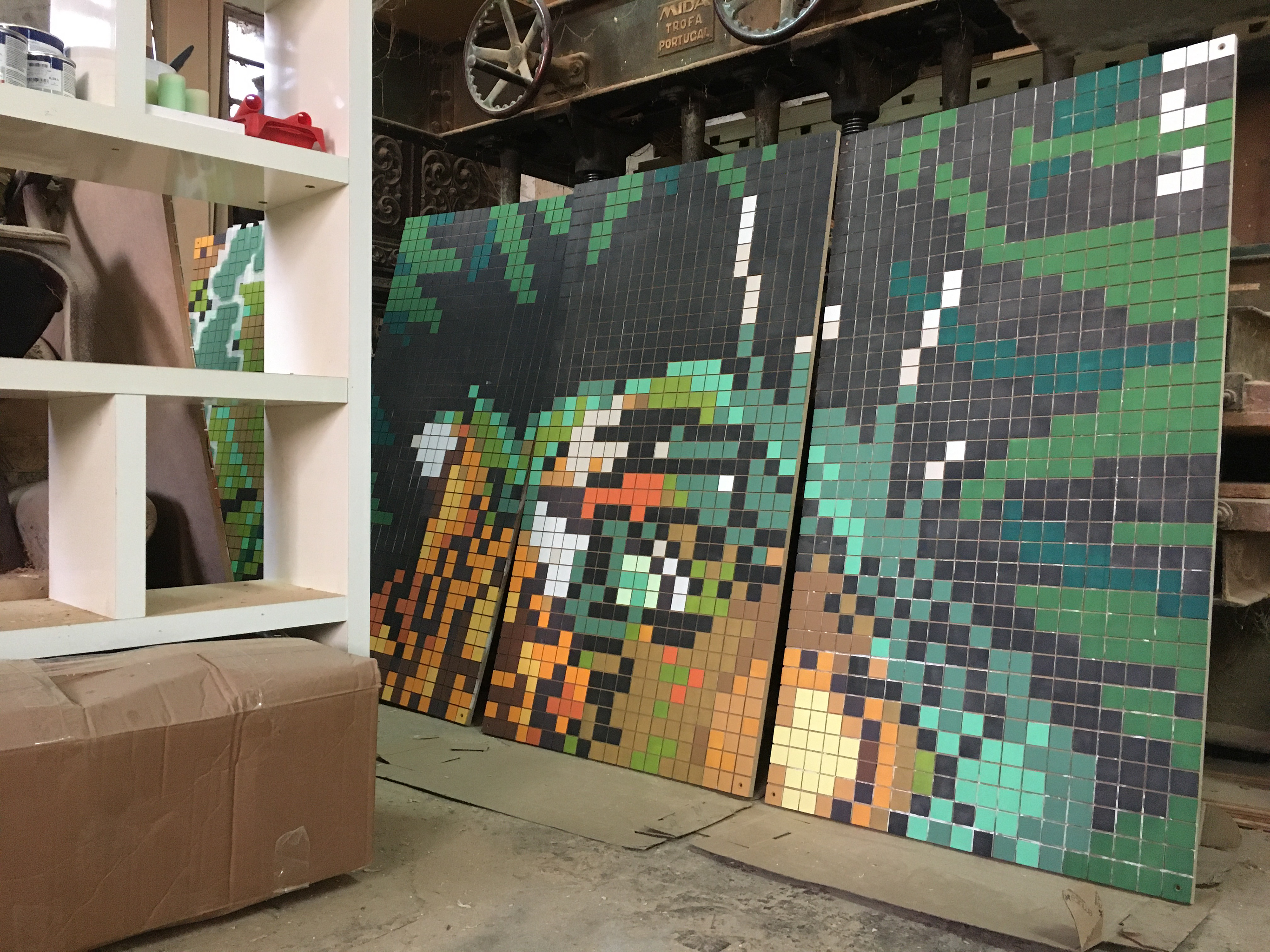
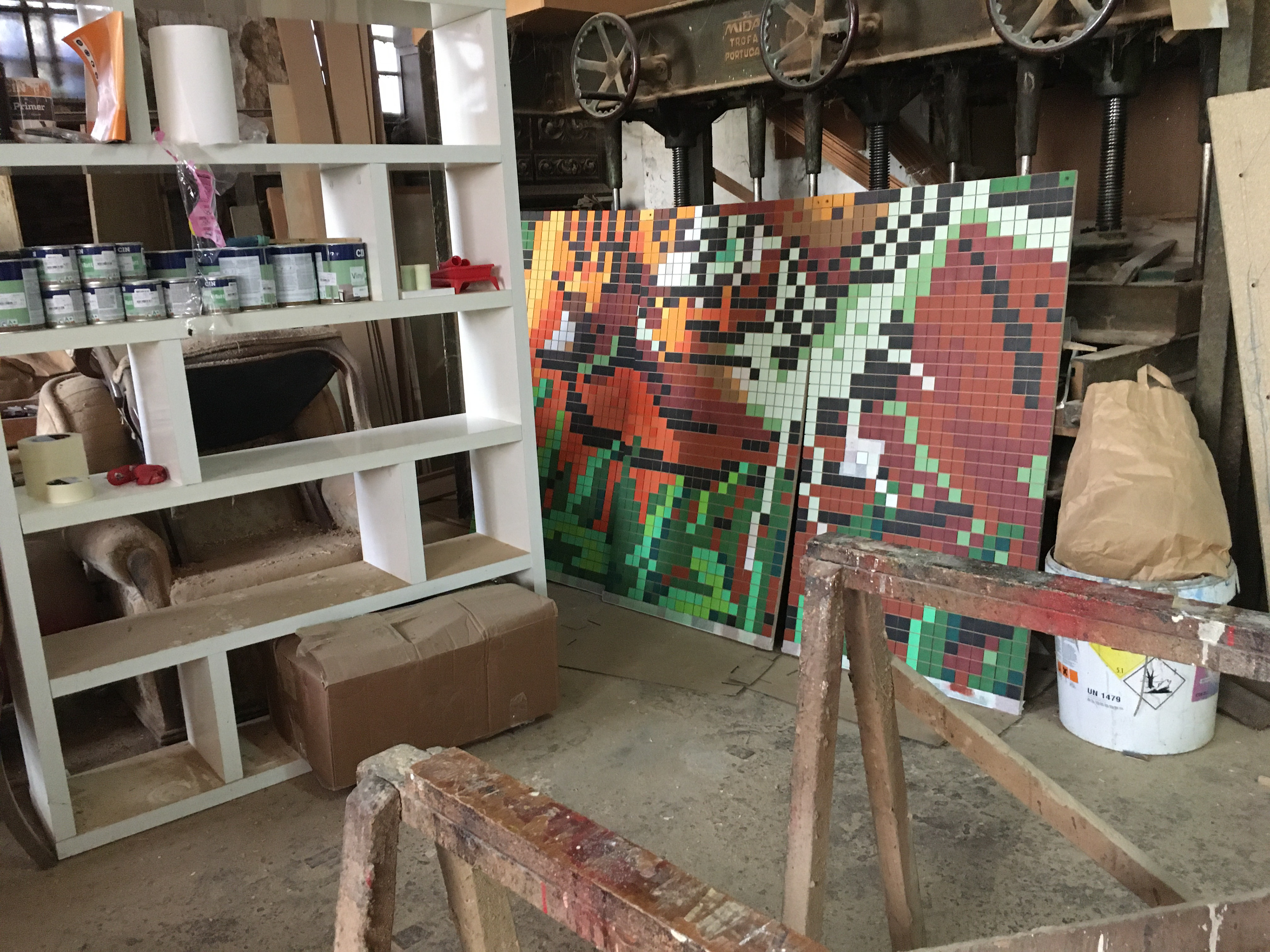
After everything was painted, as I looked at the finished slabs all next to each other, I realized the colours that were slightly off didn't work at all and gave the tiger a sickly look. So I had to go back to the paint store and try to find alternate matches that ended up working a lot better.
Finally, a matte varnish was applied, which pushed up the painting's contrast.
On the wall and into the wild
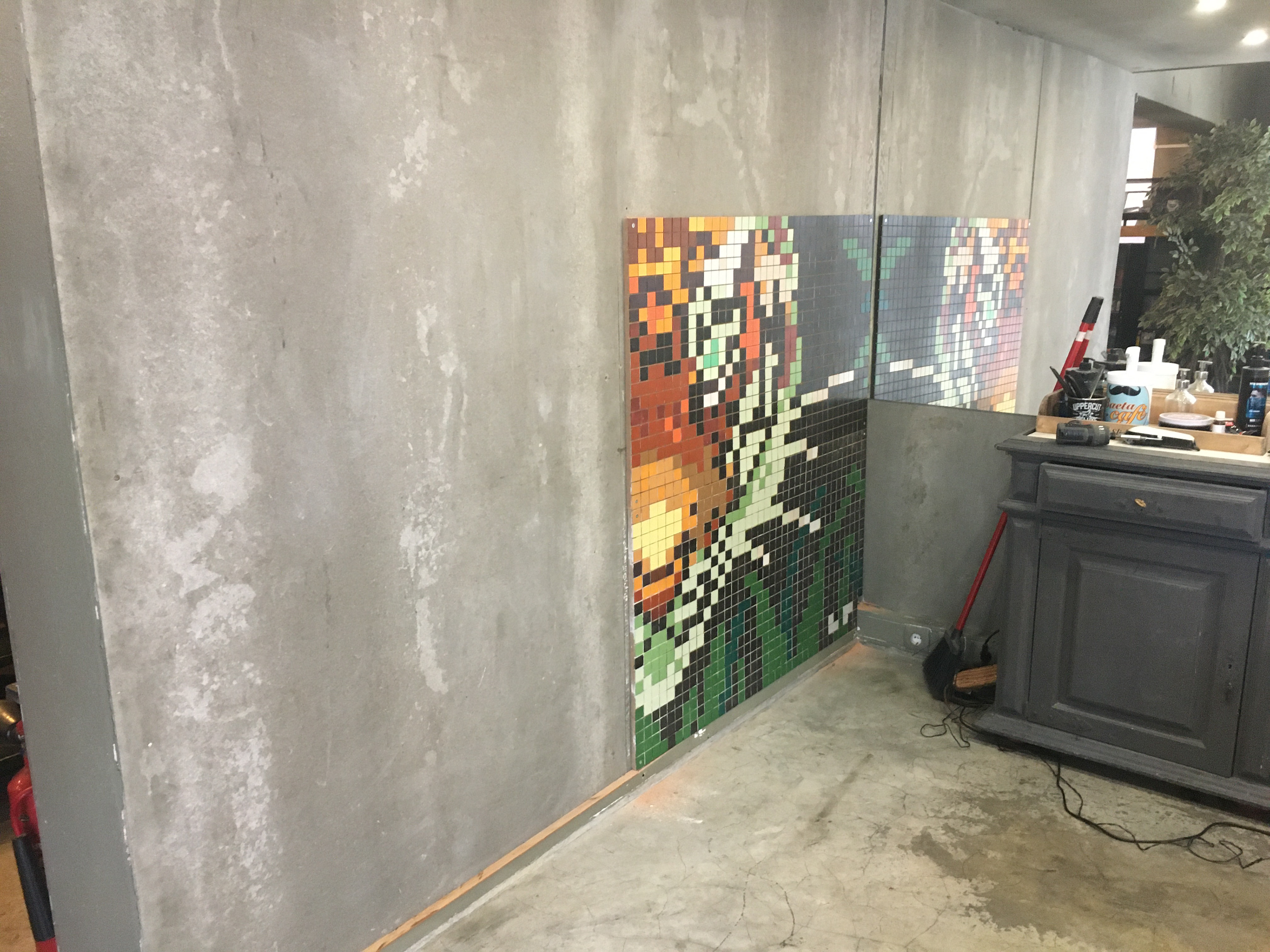
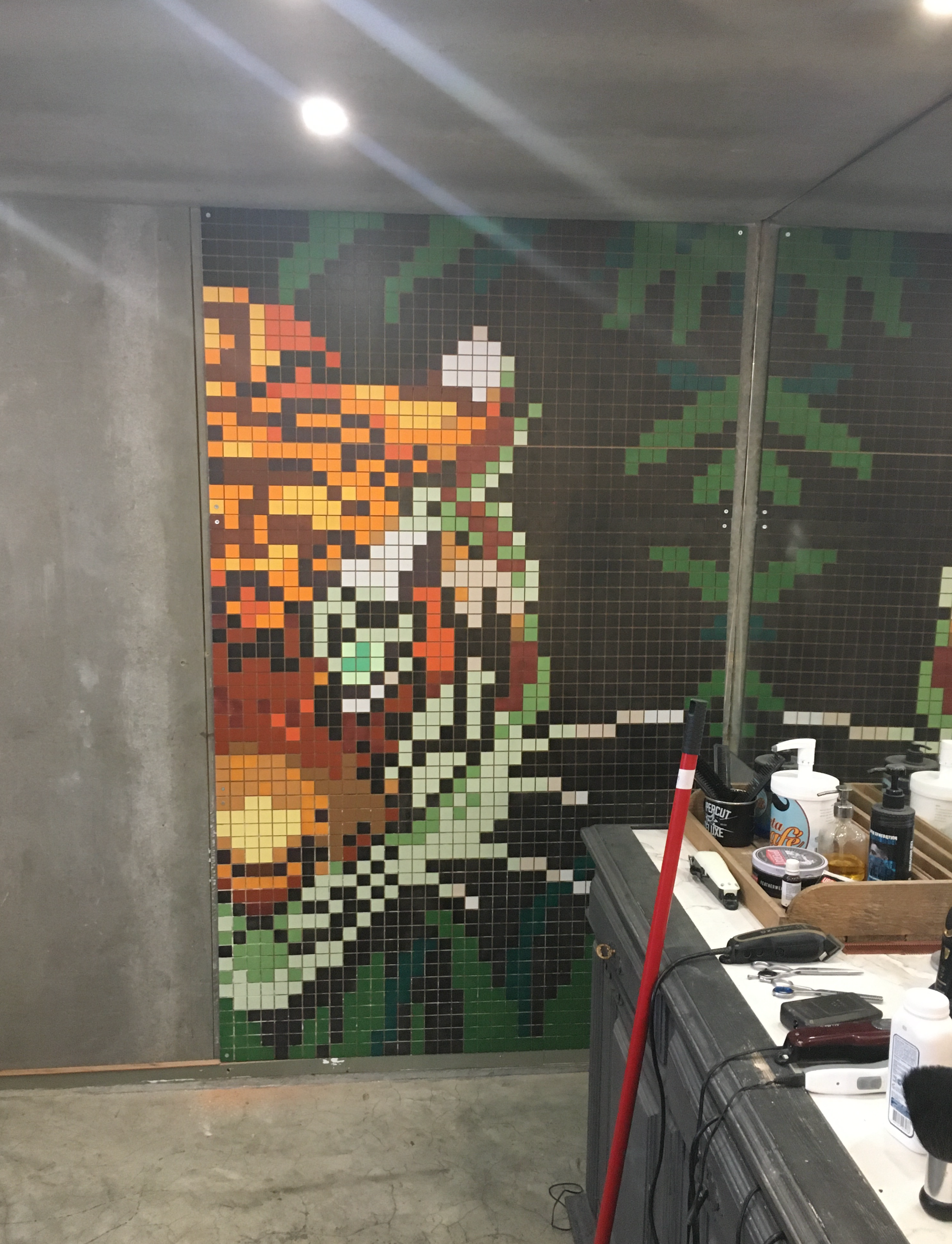
The 6 slabs were then placed on the barbershop's wall, and the heads of the screws were painted so they wouldn't be so noticeable.
A couple of months after the pandemic hit the shop went out of business, unfortunately, and Filipa disappeared, along with the tiger, never to be seen again.